Choose timezone
Your profile timezone:
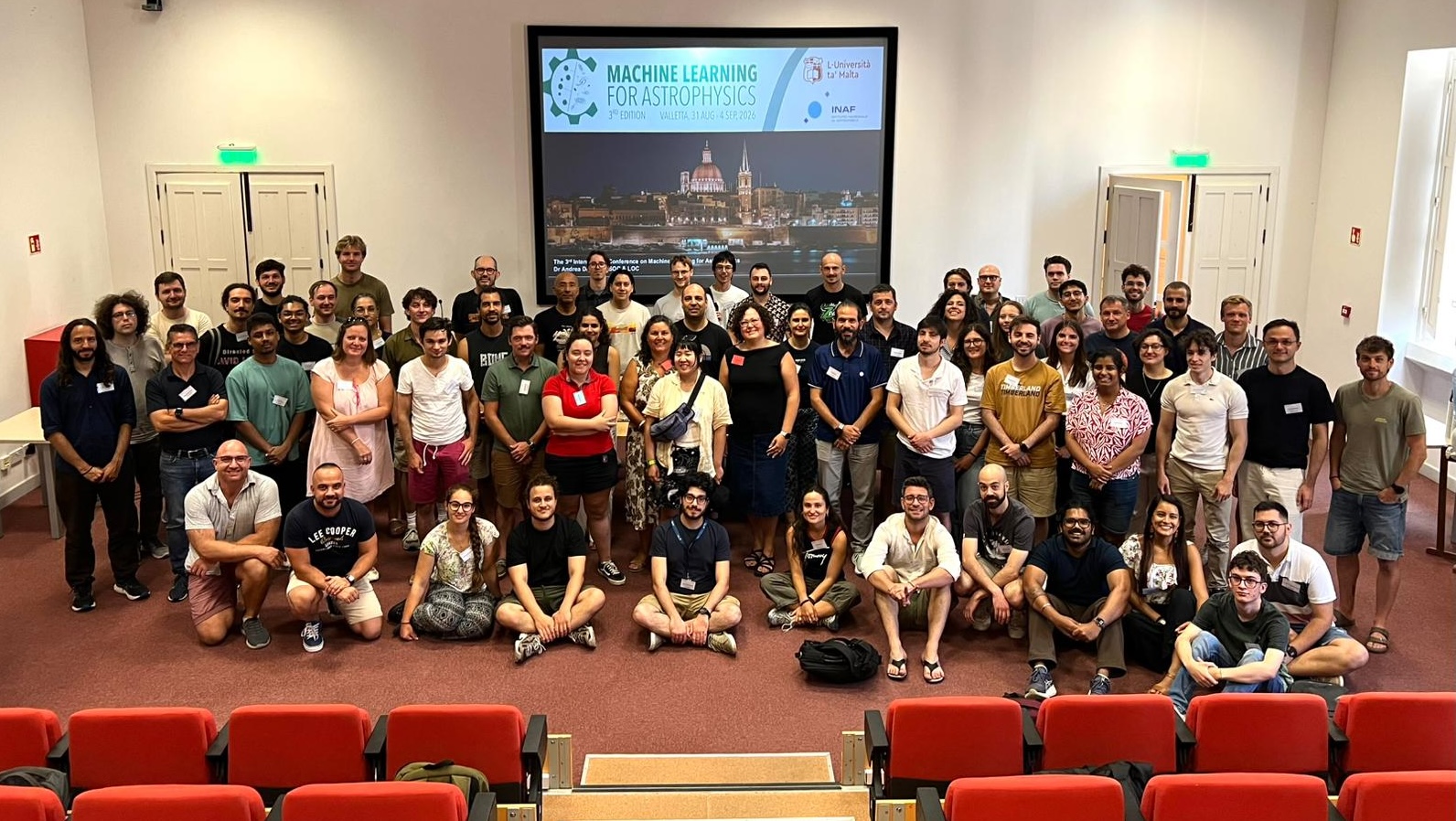
The 3rd edition of the International Conference on Machine Learning for Astrophysics (ML4ASTRO3) aims to unite leading researchers actively engaged in applying machine learning to astrophysical studies. Following the success of the previous editions, this international conference is dedicated to exploring the challenges and opportunities presented by the impending Big Data era in astronomy.
Focusing on the integration of ML/DL techniques with astrophysics, the event will showcase cutting-edge AI methodologies tailored for addressing key open problems in this field. Engaging discussions will revolve around the innovative application of AI models to observational and simulation data.
The conference includes plenty of Oral Presentations and Poster Flash Talks encompassing a wide array of topics relevant to the intersection of machine learning and astrophysics.
Main Topic Areas:
Observational surveys across different wavelengths
Time domain
Galactic and extra-galactic science
Cosmology & Simulations
Astroparticles and high energy astrophysics
Generative AI for Astronomy
Step outside your office with a printed sheet of SDSS galaxy images and ask a random passerby to sort them into categories. Even without scientific training, most people can readily distinguish early- from late-
type galaxies, the same intuition that motivated Galaxy Zoo’s landmark citizen science initiative [Lintott et al., 2011]. This simple observation underscores a profound principle: the comparison between different
images of the same class of objects encodes physical information. It is precisely this idea that drove the machine learning community to develop contrastive learning [e.g., He et al., 2020, Chen et al., 2020, Radford
et al., 2021, ...].
For observational astrophysics, this approach offers a compelling advantage: it bypasses the labelling step that systematically introduces both epistemic and aleatoric errors into supervised frameworks.
The PHANGS collaboration, which surveys nearby galaxies at high angular resolution, has catalogued more than 100,000 stellar clusters observed across a wide range of instruments and wavelengths[Thilker et al., 2021]. Despite this rich dataset, photometry-based parameter inference remains fundamentally limited by degeneracies,
most notably between an intrinsically old red cluster and a young cluster heavily embedded in a dust cloud. Several classical methods and neural networks have been proposed to resolve these degeneracies, including
CNN [Viana et al., 2026], normalizing flows [Walter et al., 2026], and Rule-based decision tree [Thilker et al., 2025]. Yet all of these approaches remain dependent on labeled training sets of variable quality.
In this talk, we present a neural network trained in a self-supervised manner on multi-wavelength images from HST, JWST, and ALMA using VICReg (Variance-Invariance-Covariance Regularization)[Bardes
et al., 2022]. Our network ingests the full spatial information encoded in multi-wavelength image cutouts, simultaneously leveraging morphology, substructure, and color gradients across all available bands. Beyond its training simplicity and stability, VICReg is specifically designed to produce a decorrelated, interpretable
latent space, a particularly valuable property for disentangling the physical parameters underlying the observed cluster population. We first demonstrate how this latent space organizes stellar clusters in a physically meaningful way, naturally revealing the structure of known parameter degeneracies such as the age-extinction degeneracy, without any label supervision. We then show how fine-tuning this pre-trained model with a small set of carefully selected labeled examples enables the inference of key physical parameters including age, stellar mass, color excess E(B-V), and metallicity, with competitive accuracy and significantly reduced dependence on large labeled datasets. Finally, we discuss how this self-supervised representation can serve
as a bridge between simulations and observations, opening new avenues for inferring parameters that are inaccessible through classical SED fitting alone.
Large-area multi-band photometric surveys produce expansive catalogs of spectral energy distributions (SEDs) that frequently contain missing or compromised data points due to image artifacts. Standard machine learning architectures are brittle to incomplete sequences, while traditional template-fitting imputation scales poorly and systematically underestimates uncertainties. We present J-Patch, a Transformer encoder deep learning architecture designed for missing data imputation and anomaly detection in photometric SEDs. Bypassing predefined spectral templates, J-Patch treats an SED as an unordered set of measurements paired with a continuous wavelength positional encoding, utilizing self-attention mechanisms to capture non-linear dependencies between photometric bands. The model predicts both the missing flux and the corresponding total variance. Applying a leave-one-out imputation strategy to the J-PLUS DR4 catalog, we demonstrate that J-Patch flux predictions exhibit a systematically lower dispersion than the empirical scatter derived from duplicated observations. The predicted total variance accurately models the true residual variance across all magnitudes, enabling the detection of subtle systematics such as Eddington bias at the faint end. Furthermore, this predictive fidelity allows for robust artifact identification; extreme discrepancies (|f_pred - f_obs|/σ > 20) are almost exclusively driven by erroneous observed photometry. We also present a value-added catalog containing leave-one-out imputed photometry for 78.6 million unique J-PLUS DR4 sources up to magnitude r < 22.
The low-resolution BP/RP (XP) spectra from Gaia Data Release 3 provide an unprecedented spectrophotometric dataset for hundreds of millions of sources, encoded as coefficients in a Hermite-function basis rather than as sampled fluxes. This representation poses both challenges and opportunities for machine learning (ML) applications. In this work, we investigate Gaia XP spectra as an object of study for supervised ML classification, with the goal of identifying representations that optimize performance, efficiency, and interpretability.
We begin by analyzing the standard Hermite-function basis used in Gaia DR3. We show that truncation of the coefficient space applied separately to the blue and red photometer components can improve classification performance across multiple metrics, indicating that a reduced representation mitigates noise and redundancy in the data. We then explore alternative orthogonal bases for representing XP spectra and demonstrate that these can yield improved dimensionality reduction while preserving relevant information for classification tasks.
Finally, we move beyond the traditional multivariate paradigm and investigate functional data analysis approaches, treating XP spectra as continuous functions. We find that such functional methods, though rarely applied in this context, provide substantial advantages: they enhance model interpretability and significantly reduce computational cost, while maintaining competitive predictive performance.
We present a self-supervised contrastive learning approach for the classification of white dwarf atmospheric types using Gaia DR3 data. Our framework combines XP spectral coefficients with photometric and astrometric features through a multi-branch neural encoder, trained without spectroscopic labels using physically motivated augmentations. The resulting embeddings show substantially improved class separation compared to raw spectral coefficients and classical unsupervised methods, and enable the recovery of rare spectral subtypes that are undetectable with linear classifiers. We discuss the potential of this approach for automated white dwarf classification in the era of Gaia DR4 and future large-scale spectroscopic surveys.
Koexai is a deep-tech company working at the interface between machine learning and astrophysical research, supporting scientific teams in translating domain-specific problems into robust ML workflows. Over the last year, within the INAF / PNRR / ICSC Spoke 3 context, Koexai has worked on five research projects spanning supernova characterisation, cosmological simulations, pulsar-timing inference, X-ray background mitigation, and gamma-ray transient analysis.
This contribution uses ASTRAI as a case study of the Koexai approach to Astro-ML research. Developed in collaboration with the University of Catania, ASTRAI starts from physics-based models of hydrogen-rich supernovae and uses their synthetic light curves to train machine-learning models for light-curve generation and physical-parameter inference. The resulting pipeline enables fast characterisation while preserving physical modelling as the foundation of the ML system.
Drawing on ASTRAI and lessons from the other four projects, the talk will discuss how astrophysical knowledge and machine-learning expertise can be combined across problem formulation, data preparation, modelling, validation, and scientific interpretation, highlighting a shared-ownership model for collaboration between research groups and specialised ML teams.
Next-generation radio astronomy surveys are delivering millions of resolved sources, but robust and scalable morphology analysis remains difficult across heterogeneous telescopes and imaging pipelines. We present STRADAViT, a self-supervised Vision Transformer (ViT) continued-pretraining framework for learning transferable encoders from radio astronomy imagery. The framework combines mixed-survey data curation, radio astronomy-aware training-view generation, and a ViT-MAE-initialized encoder family with optional register tokens. It supports reconstruction-only, contrastive-only, and two-stage branches. Our pretraining dataset comprises radio astronomy cutouts drawn from four complementary sources (MeerKAT, ASKAP, LOFAR/LoTSS, and SKA SDC1 simulated data). We evaluate transfer with linear probing and fine-tuning on three morphology benchmarks spanning binary and multi-class settings (MiraBest, LoTSS DR2, and Radio Galaxy Zoo).
Relative to the ViT-MAE initialization used for continued pretraining, the best two-stage models improve Macro-F1 in all reported linear-probe settings and in two of three fine-tuning settings, with the largest gain on RGZ DR1. Relative to DINOv2, gains are selective rather than universal: the best two-stage models achieve higher mean Macro-F1 than the strongest DINOv2 baseline on LoTSS DR2 and RGZ DR1 under linear probing, and on MiraBest and RGZ DR1 under fine-tuning. A targeted DINOv2 initialization ablation further indicates that the adaptation recipe is not specific to the ViT-MAE starting point and that, under the same HCL recipe, the register-based DINOv2 initialization is stronger than the non-register alternative. The ViT-MAE-based STRADAViT checkpoint is retained as the released checkpoint because it combines competitive transfer with substantially lower token count and downstream cost than the DINOv2-based alternative. These results indicate that radio astronomy-aware view generation and staged continued pretraining can provide a stronger domain-adapted starting point than off-the-shelf ViT checkpoints for radio astronomy transfer, especially when representation quality is assessed through linear probing.
Vision Transformers (ViTs) are increasingly being adopted for large-scale astronomical imaging, yet discussion of performance often centers on model scale and dataset size rather than on the quality and structure of the training data themselves. In radio astronomy, this is a significant omission: images are frequently sparse, background-dominated, and affected by instrumental artefacts, tiling patterns, and large variation in source extent. Under such conditions, self-attention may be steered toward non-physical or weakly informative structure unless the training distribution is carefully curated. We therefore present a data-centric study of ViT training for radio astronomy imaging, aimed at quantifying how curation strategy influences downstream behaviour.
Our starting point is a strong domain-adapted ViT baseline trained with a two-stage self-supervised procedure and curation-aware view generation that preferentially samples informative source regions. From this reference point, we isolate the effect of data curation through a sequence of controlled interventions. Specifically, we compare the baseline against: (i) training without object-centric cropping and with minimal augmentation, (ii) training on a pre-filtered dataset with substantially fewer empty cutouts, (iii) training on a more tightly curated object-centric dataset that reduces the need for online selection of informative regions, and (iv) training on a curated dataset rebalanced toward larger and more extended sources. These experiments are designed to test whether improved curation quality and morphological representativeness can compensate for weaker online selection strategies or larger nominal data volume.
We assess the resulting models on downstream radio morphology classification tasks, considering predictive performance, calibration, and robustness across heterogeneous imaging regimes. In addition, we examine internal attention behaviour to determine whether stronger curation reduces reliance on spurious non-physical structure such as empty regions, artefacts, and image-boundary effects. The goal is not merely to compare preprocessing choices, but to establish data curation as a first-order design variable in transformer-based scientific imaging. More broadly, this study aims to clarify when training-set quality, rather than dataset scale alone, governs the reliability of ViT models in radio astronomy.
Image reconstruction in radio interferometry is a classic ill-posed inverse problem: recovering a continuous sky brightness distribution from sparse Fourier (uv-plane) samples. While the standard CLEAN algorithm is robust for point sources, it often introduces artifacts when imaging extended, diffuse structures. Regularized Maximum Likelihood (RML) methods offer an alternative but face significant computational overhead and tuning challenges as target resolutions increase.
In this talk, I present a framework that overcomes these limitations by modeling the sky brightness as a continuous neural network. Unlike traditional "black box" deep learning, our approach is self-supervised, optimizing the network to fit the visibility data of a single observation directly. By mapping 2D sky coordinates to intensity values, the network functions as a resolution-independent representation rather than a fixed pixel grid. This architecture captures large-scale structures and fine details simultaneously, surpassing CLEAN with double the resolution and four times the fidelity. I will demonstrate the method’s performance on both synthetic tests and real ALMA datasets, proposing a new paradigm for high-fidelity interferometric imaging.
Active Galactic Nuclei (AGN) play a key role in galaxy evolution, but identifying a complete, unbiased sample is complicated because it requires extensive, multi-wavelength detections. To address this, we apply a machine learning framework to the Dark Energy Spectroscopic Instrument (DESI) survey, utilizing the available rest-frame UV and optical range (3600–9800 Å) to leverage established, precise AGN classification methods.
Our methodology employs SPENDER, an unsupervised machine learning framework, to compress galaxy spectra into a multi-dimensional latent space. Using a classifier algorithm on a curated, balanced and diverse sample of galaxy spectra—spanning $0 < z < 3.5$, our framework achieves an AGN detection rate exceeding 75%. By analyzing the topology of the latent space, we isolate the specific spectral features driving classification and examine AGN co-evolutionary tracks that are typically obscured in standard projections. Furthermore, we perform traversals of the latent space, stacking spectra within local neighborhoods to study the transition of galaxy properties across different types of galaxies in our dataset. This process helps us understand the regions of confusion/misclassification with the classification algorithms, as the latent representation captures complex, non-linear behaviour of galaxy spectra.
Finally, we employ a Bayesian inference pipeline that maps the purely mathematical latent space to fundamental physical spectral properties, such as stellar mass, metallicity, age, and other parameters, derived from DESI survey. This approach serves as a high-speed, scalable infrastructure alternative to the traditional Spectral Energy Distribution (SED) fitting. Such an efficient methodology makes it suitable for the massive datasets anticipated in future DESI, and other wide-area spectroscopic surveys.
The main objective of the project is to improve the quality and usability of data from next-generation radio telescopes, such as those involved in the SKA project, by developing advanced methodologies to increase resolution, automatically remove artifacts, and intelligently compress datasets to optimize storage. These datasets, extremely large and multidimensional, require innovative solutions that integrate high-performance computing (HPC), machine learning, and immersive visualization technologies. The expected outcomes include new tools for the analysis and management of astrophysical big data, contributing to scientific progress in astronomy and generating broader technological impacts across various domains.
Hyperspectral data received from missions like Cassini-Huygens provide detailed insights about the surface composition of bodies in the outer solar system. However, existing spectral classification methods either require heavy computation, extensive observational data, or manual fine-tuning of features. This study proposes the use of classification accuracy as a similarity metric, using a Support Vector Machine (SVM) to distinguish between pairs of spectral data, with the ability of the model to distinguish the spectra (accuracy) being inversely proportional to the similarity of samples. Data from three compositionally distinct moons of Saturn (Titan, Rhea, and Enceladus) was used in pairs with binary classification and 5-fold cross-validation for robust accuracy estimates. The results showed a 96.9% accuracy for the Titan-Enceladus pair, which is explained by stark differences in albedo and composition, an 81.6% accuracy for the Titan-Rhea pair, explained by compositional differences but similarity in tholin presence on their surfaces. The most surprising result was the Rhea-Enceladus pair, which should have shown low similarity with Enceladus’ active surface and Rhea’s dormant one, but instead showed the highest similarity. This is explained by the fact that despite differences in surface activity, the moons share a water-ice composition and similarity in surface make-up, leading to similar spectral readings. Thus, SVM accuracy provides a data-driven, lightweight approach to capture spectral differences, working even with limited datasets.
With the arrival of Euclid/LSST and other large-scale surveys we address the automatic detection and segmentation of galactic features from deep sky images. The training of machine learning and deep learning systems requires manual annotations, which tend to present a high variability between annotators. For complex astrophysical features such as low surface brightness collision debris, even expert annotators do not perfectly agree on the features' exact shape and/or nature.
To avoid any ambiguity in the learning process, we propose to exploit the confidence information that is carried by the inter-annotator variability. We define a consensus associated with a new dedicated loss function, allowing us to exploit the inter-annotator variability. This loss mitigates learning based on a pixel-basis confidence measure. Annotators may be weighted within this consensus with respect to their expertise.
We experiment with various consensus formulas and galactic features to assess the effectiveness of this strategy in improving the learning of a deep neural network. A first series of experiments investigates the role of annotator composition and weighting within the consensus. We compare configurations ranging from the full annotator pool, to expert-weighted consensus, expert-only subsets, single-annotator baselines, and non-expert-only groups. This allows us to isolate the respective contributions of annotator diversity, expertise, and consensus formulation to the learning dynamics.
A second series of experiments examines the influence of network-level and data-level factors. We study how the strength and scale of input image normalisation affect feature representation, distinguishing between two complementary approaches: intensity scaling through arcsinh and sigmoid transforms, which compress the dynamic range of pixel values, and multi-scale decomposition through wavelet transforms, which expose structural information across spatial frequencies. We additionally evaluate data augmentation strategies, to identify those most beneficial for the segmentation of faint and diffuse structures.
Across both axes of experimentation, we obtain improved convergence and accuracy for the segmentation of various structures including low brightness structure.
Modern sky surveys generate images of galaxies at a scale that renders manual classification as an unscalable task, motivating the development of automated deep learning pipelines. This study presents a systematic comparison of Convolutional Neural Networks (CNNs) and Vision Transformers (ViTs) for automated galaxy morphology classification on a curated subset of the Galaxy Zoo 2 dataset. To address the severe class imbalance inherent in the Galaxy Zoo 2 dataset, the Hierarchical Data Learning with Weighted Sampling and Label Smoothing (HIWL) framework is adopted, which decomposes the seven-class classification problem into a two-stage hierarchical pipeline. Stage 1 performs coarse morphological grouping, with Stage 2 conducting fine-grained binary classification within each group. Weighted sampling and label smoothing are applied throughout to mitigate the effect of class imbalance and disagreement among volunteer annotations.
Linear probing is conducted on a candidate pool of ten architectures -ResNet-50, ResNet-101, ResNet-152, YOLOv8m-cls, YOLO11m-cls, ViT-Base/16, DINO, DINOv2, ViT-MAE, and RF-DETR - to obtain a baseline measure of representational transferability to galaxy morphology. Based on the linear probing performance, a subset of architectures is selected for full end-to-end fine-tuning, with additional architectures included to ensure more comprehensive evaluation across pretraining methods and architectural families. Layer-wise learning rate decay (LLRD) is applied to all ViT-based architectures during fine-tuning.
Findings reveal a consistent performance ceiling of approximately 88% overall accuracy and 81% Macro F1 across all fine-tuned architectures, suggesting the bottleneck is not architectural capacity but rather label noise and inter-annotator disagreement inherent to the Galaxy Zoo 2 crowdsourced annotations. This hypothesis is investigated through dataset filtering based on annotator agreement thresholds and an analysis using a new data partition, both of which provide indicative evidence of annotation-driven limits on performance.
Despite this ceiling, ViT-based models, particularly DINOv2, demonstrate a slight but consistent advantage over CNN-based counterparts, achieving the best overall performance of 88.56% accuracy and 81.07% Macro F1.
Unraveling the building blocks of the Milky Way’s stellar halo is typically achieved using either stellar dynamics or chemical abundances. While abundances are generally considered more robust tracers, clustering in this high-dimensional chemical space is highly non-trivial: measurement noise at low [Fe/H], the intrinsic scatter of distinct systems, and, most importantly, the heavy overlap of accreted populations make reliable partitioning a significant challenge, even for state-of-the-art density-based clustering algorithms.
To overcome these limitations, I present a framework based on Graph Attention Networks (GATs) that jointly leverages 13 chemical abundances from GALAH DR4 alongside integrals of motion (energy, E, and angular momentum, Lz) from Gaia. The graph is constructed such that stars represent nodes, abundances serve as node features, and edges are formed based on proximity in the E-Lz space. This graph then serves as input to a GAT autoencoder trained strictly to reconstruct the node features, yielding a dynamics-informed, denoised chemical space optimized for density-based clustering. I show that clustering the reconstructed space recovers globular clusters with a homogeneity and completeness that significantly improves upon the performance of PCA or standard autoencoders. Additionally, it successfully separates the in situ from the accreted halo and recovers stars from the Gaia-Sausage-Enceladus system that have lost their dynamical coherence (but not the chemical one), thereby resolving previously unrecognized chemical substructures within it.
While the astrophysical interpretation of newly discovered substructures retrieved from these learned spaces must still be carefully validated against the original abundances, this graph-based representation learning approach effectively addresses some of the limitations of clustering in raw observational spaces. By inherently embedding kinematic context and simultaneously denoising the chemical signatures of overlapping systems, this methodology provides a powerful tool to unravel the complex merger history of our Galaxy in present and upcoming spectroscopic surveys.
With telescopes like the Euclid in orbit and CSST in the works, we are looking at an emerging era of astronomy with surveys producing millions and millions of slitless spectrograms. While the analytical extraction techniques are sufficient for the current amount of data, the community will require faster pipelines for future data releases. Added to the large amount of expected data, slit-less spectroscopy, as executed by instruments such as Euclid/NISP, presents significant challenges for data processing — most notably spectral contamination arising from the overlap of multiple dispersed sources on the detector. To address these difficulties, we are developing a machine learning approach aimed at extracting and decontaminating 1D spectra directly from real flight 2D spectrograms. Our strategy proceeds incrementally: as a first step, we develop and validate a pipeline to extract 1D spectra from 2D JWST slit spectroscopic data, then we match the spectrogram resolution and wavelength range to that of Euclid, and then we will emulate the spectral overlap artificially. We will modify our pipeline at each step to increase the complexity that can be handled. While this work is tailored for Euclid data, the strategies used in this work will serve as a blueprint for any future slitless or even slit spectroscopic surveys. This generality makes this work a valuable asset in the coming era of large-scale, slitless and highly multiplexed spectroscopic surveys, where efficient and robust automated extraction pipelines will be essential.
The Fermi Large Area Telescope (LAT) has significantly advanced our understanding of the high-energy gamma-ray sky, yet nearly one third of the sources in the Fourth Fermi-LAT Source Catalog (4FGL) remain unassociated with known astrophysical objects. Traditional machine learning approaches used to classify these sources typically treat spectral features as independent tabular variables and often rely on spatial coordinates, which can introduce biases related to source location.In this work, we present a 1D convolutional neural network (1D-CNN)–based hierarchical deep learning framework designed to classify unassociated FermiLAT sources by exploiting the intrinsic structure of their spectral and variability properties while avoiding the use of galactic coordinates. Our primary goal is to identify high-confidence pulsar candidates and further distinguish betweenYoung Pulsars and Millisecond Pulsars (MSPs), providing valuable targets for future radio observations.We developed a 1D-CNN architecture, named TabularResCNN, that interprets the spectral data from the 4FGL-DR4 catalog as sequential signals, enabling the model to capture local correlations and spectral curvature within the SpectralEnergy Distribution (SED). The classification is performed hierarchically: first separating Active Galactic Nuclei (AGNs) from Pulsars and, then distinguishing Young Pulsars from MSPs. To address class imbalance, we employ a cost sensitive learning strategy, and we use Grad-CAM techniques to assess the interpretability of the model.Our model achieves an accuracy of ~98 % in separating AGNs from Pulsars and~81 % in distinguishing Young Pulsars from MSPs. Applying the method to ~2500 unassociated sources, we identify ~200 pulsar candidates and ~1100 AGN candidates. The predicted populations show strong astrophysical consistency in their spatial and physical distributions, demonstrating the potential of this approach to guide future pulsar searches with facilities such as FAST and SKAO.
Gamma-ray bursts (GRBs) are among the most energetic phenomena in the Universe and provide a unique laboratory for physics under extreme conditions. Rapid classification of GRBs based on their prompt emission is essential to guide timely multi-wavelength and multi-messenger follow-up observations.
In this work, we present a data-driven pipeline for GRB classification based on observations from the Fermi Gamma-Ray Burst Monitor (GBM). Our method introduces waterfall plots as a novel data representation, encoding a broad set of key prompt emission properties into high-dimensional images. We reduce the dimensionality of these data using a self-supervised deep learning approach, followed by a semi-supervised algorithm that assigns classification probabilities to each event.
Our approach enables near real-time classification of newly detected GRBs, delivering both a predicted progenitor class and a probabilistic estimate, making it well suited for integration into rapid follow-up frameworks.
The detection of high-redshift (high-z) Gamma-ray Bursts (GRBs) can enhance our understanding of early universe phenomena, although detecting them in gamma-rays is challenging due to the sensitivity of current telescopes in this energy range.
We present a data-driven methodology based on an Artificial intelligence (AI) approach to identify faint high-z GRB signals in Fermi Large Area Telescope (LAT) data, exploiting the expected power-law extension of the afterglow emission into the LAT energy range. From an AI perspective, the identification of high-z GRB afterglows represents a challenging low-signal-to-noise classification problem in a high-dimensional space.
In this work, we simulate high-z ($z>2$) GRB afterglow emission and its detection by Fermi-LAT by modeling the spectral and temporal evolution of the afterglow and convolving the resulting events with the Instrument Response Functions. We train a Convolutional Neural Network (CNN) encoder, which excels at pattern recognition for feature extraction, coupled with a multilayer perceptron for binary classification. We encode observational data as four-dimensional tensors – 4D binned counts-maps – combining spatial, spectral, and temporal information to capture the afterglow evolution. This representation allows the CNN to jointly learn spatial morphology, spectral characteristics and temporal patterns.
This architecture learns correlated patterns across domains without relying on hand-crafted features, making it transferable across instruments with different resolutions and energy ranges. After training on simulated data, model performance is comprehensively evaluated using multiple classification and calibration metrics and further assessed by applying the model to real Fermi-LAT observations of GRB afterglows spanning the redshift range $z\in [0.05-5.26]$. The classification results are interpreted using SHAP (Shapley Additive exPlanations), a game theoretic approach that quantifies feature contributions to the model predictions.
This framework is scalable and instrument-independent, providing a general strategy for faint transient detection that can be extended to other classes of astrophysical events in current and next-generation observatories.
The LEM-X observatory is a proposed lunar coded-mask telescope for wide-field monitoring of steady and transient sources in the (2–50 keV) range, with a pathfinder under development with slated launch in the early 2030s [1]. Coded-mask imagers represent essential tools in high energy astrophysics, providing all-sky cover with respect to narrow FoV free-flier telescopes. However, these systems require robust sky decoding techniques to efficiently extract and analyse the collected data.
The Iterative Removal Of Sources (IROS) [4] is a reconstruction method used to enhance the imaging performance of coded-mask cameras, allowing for efficient localisation and detection in all-sky surveys while ensuring affordable computational costs.
IROS relies on the iterative identification and subtraction of statistically significant sources. To do this effectively, the procedure demands highly accurate analytical modelling of the source projection on the detector plane, which must account for the system design and instrumental effects [2]. Generating high-fidelity models can be computationally expensive and difficult to achieve due to photons energy statistics, creating a severe bottleneck when processing crowded sky-fields and/or searching for transient signals [3].
To overcome these computational barriers, we propose a novel, data-driven approach utilising generative deep learning models to identify a source and simulate its footprint. By training a diffusion model directly on ad-hoc simulated data, our method inherently captures the instrumental effects without requiring relatively computationally heavy, first-principles physics simulations and design considerations. This allows for the rapid and accurate generation of source templates for the subtraction phase, significantly reducing the computational cost of sky reconstruction while maintaining or improving decoding efficiency.
To our knowledge, there is currently no literature exploring a machine-learning-based IROS implementation, nor has this specific type of generative analysis been applied to coded-mask data. The whole framework acts as groundwork for faster, highly efficient analysis pipelines for current and future high energy and multi-messenger astrophysics analyses.
References
[1] E. Del Monte et al., 2024. “Status of the Lunar Electromagnetic Monitor in X-rays (LEM-X)”, Space Telescopes and Instrumentation 2024. doi:10.1117/12.3018838
[2] Y. Evangelista et al., 2026. “Design and performance of the coded mask for the Lunar Electromagnetic Monitor in X-rays (LEM-X)”, Experimental Astronomy 61, 7. doi:10.1007/s10686-026-10047-x, arXiv:2603.10752
[3] E Giancarli et al., 2026. “Enhancing LEM-X Imaging with IROS”, in preparation
[4] A. Hammersley et al., 1992. “Reconstruction of images from a coded-aperture box camera”. Nuclear Instruments and Methods in Physics Research Section A: Accelerators, Spectrometers, Detectors and Associated Equipment, 311(3):585–594
The black hole binary GRS 1915+105, a typical microquasar, is known for its unique X-ray variability, which can reveal critical insights into black hole physics. Belloni et al. (2000) indicated that it is possible to classify its remarkable variability into twelve classes. This classification provides a foundation for exploring the physical phenomena underlying these variations, which can significantly impact our understanding of the accretion disk around the black hole and the formation of the jet. To analyze the long-term evolution of GRS 1915+105, it is necessary to classify the entire Rossi X-ray Timing Explorer (RXTE) data set with high accuracy over its 16-yr lifetime. We aim to develop machine learning classification models that capture time-varying patterns and identify unknown classes. We also aim to investigate how transitions between the classes occur. Using the empirical classification of Belloni et al. (2000) as labeling data, we employed deep learning to classify the variability patterns of RXTE X-ray light curves. The preliminary model achieved classification accuracy of over 97% and an average AUC of over 99%. Using the classification models, we can determine how long each pattern persists, how the system transitions between them, and whether other variability patterns exist. Ultimately, GRS 1915+105 will help shed light on what distinguishes the microquasar from other black hole binaries and on the conditions necessary for jets to form.
Detailed particle transport simulations, particularly through the Geant4 toolkit, are essential for evaluating instrumental particle backgrounds that ultimately limit detector sensitivity and drive the design and optimization of low-background instrumentation in high-energy astrophysics and particle physics. By propagating incident particle fluxes through detailed mass models and simulating their interactions up to detector response, Geant4 provides a physically accurate but often computationally prohibitive framework, especially when rare-event backgrounds and complex detector configurations must be explored over large parameter spaces.
We present the development of a machine-learning framework based on Conditional Variational Autoencoders (CVAEs) aimed at accelerating Monte Carlo particle transport simulations while preserving the multidimensional statistical properties of the original particle distributions. The method is designed to learn correlated features emerging from particle interactions with complex geometries and to generate statistically faithful synthetic event samples, conditioned on relevant physical parameters, to enhance simulation efficiency.
The framework is currently being applied to simulations of environmental background in prototype Transition-Edge Sensor arrays with active anticoincidence systems, motivated by ultra-low-background studies for high-energy space missions and dark matter experiments such as NewAthena and IAXO, respectively. In parallel, its adaptability to other computationally demanding cases is being investigated, particularly for space-based high-energy observatories and cosmic-ray experiments.
Particular emphasis is placed on assessing generative fidelity through distribution-level comparisons and on estimating the achievable reduction in computational cost relative to full Geant4 simulations. This work explores generative machine learning as a flexible fast-simulation approach for complex background modeling, especially in data-scarce regimes and multiscale simulations. The approach opens potential applications for detector optimization, large-scale Monte Carlo production, and rapid exploration of low-background instrument configurations across a broad range of astroparticle and space instrumentation studies.
Continuous monitoring of environmental conditions at astronomical observatories is critical for optimizing operations and assessing the integrity of observational data. All-sky cameras are a cost-effective way to capture a 180° field of view to monitor clouds and other adverse weather. In this work, we apply several supervised ML algorithms to classify all-sky images by atmospheric condition. Furthermore, for images with partial cloud cover, we estimate the coverage percentage using segmentation techniques. These results are used to classify thousands of archival images and have the potential to inform both real-time observatory operations and future data reduction.
The coming decade of sky surveys will reveal the changing universe at a depth and scale we have never had. Meeting that opportunity takes more than better analysis — it reaches into how we choose what to observe, how we draw inference from what we collect, and how we model the physics underneath. I will introduce the NSF-Simons AI Institute for the Sky (SkAI), where astrophysicists, computer scientists, and statisticians are building AI that is shaped by physics from the start. I will then turn to one thread of that effort: stars. Interpreting stellar populations requires simulating them by the millions, yet each detailed simulation takes hours or days. Advanced model emulators and embedding the equations of stellar structure directly into neural models offers a way through and I will discuss our recent results.
Machine learning is often viewed as a black box when it comes to understanding its output, be it a decision or a score. Automatic anomaly detection is no exception to this rule, and quite often the astronomer is left to independently analyze the data in order to understand why a given event is tagged as an anomaly. Interpretable AI on the other hand provides clues to the analyst, often in the form of feature importance. However, generalist methods on the market tend to exhibit slow performances when applied to big data.
Here I’ll present how the Signatures method, a post-hoc method-specific scheme providing a surrogate anomaly model, can reach tractable performances when applied on the 720 million light-curves from ZTF DR23 and enable active learning for feature selection, therefore improving the rate at which anomalies are found in the sample.
Astronomical transients, including Fast Radio Bursts and Gamma-ray Bursts, are among the most energetic known phenomena in the universe, originating mostly from extragalactic distances. To gain deeper insight into their origin and nature, it is essential to analyse their substructure. A rapidly increasing number of observations allows for data-driven analysis of these transients. In this talk I will present a machine learning (ML) model able to analyse the sub-burst structure of astronomical transients. Light curves of transients often consist of several components and can thus be modeled as a superposition of multiple short sub-bursts. Each of these sub-bursts can be characterised by several parameters, including their arrival time and skewness, which carry important information about the trigger and emission processes. One of the main challenges is that the number of sub-bursts within each transient time series is unknown, making traditional sampling methods non-trivial to implement and computationally inefficient. To address this, our ML model first uses an encoder followed by a multi-layer perceptron to infer a distribution over the most likely number of sub‑bursts. Using this information, a transformer-based model then infers the parameter posteriors of each sub-burst using flow matching. To gain insight into the robustness and performance of the model, we apply it to both synthetic and real Fast Radio Bursts (FRBs), which are very bright and short millisecond duration radio transients, observed by the Canadian Hydrogen Intensity Mapping Experiment telescope (CHIME).
Uncertainties in the mass-loss history model for stellar evolution hinder the development of a comprehensive understanding of the scenarios linking different supernova types to their progenitors.
This work aims to predict the physical parameters of the progenitor directly from time sequences of synthetic multi-band images. The focus is on redshift estimation.
We propose a generative method based on learning an embedding representation of the entire event. This embedding is generated using a Generative Adversarial Network (GAN) architecture, where the generator incorporates recurrent neural network (RNN) layers to model the event's temporal evolution. Training this particular type of GAN — known as a Time-GAN — to generate new samples enables the encoder to learn to produce robust embeddings of supernova events. These embeddings are then used to predict progenitor parameters.
Preliminary tests on simulated data show that the learned embedding encodes sufficient information to accurately recover parameters such as redshit, comparable to those obtained using standard light-curve fitting techniques. The key contribution of this work is the development of a general embedding representation that can be used as input for various models, including those used for classifying and forecasting time-evolving sources. Moreover, this methos is scalable to the upcoming large-scale time-domain surveys, such as LSST, this approach will enable the fast, automated and physically grounded analysis of millions of transients — a task that would otherwise be unfeasible using traditional methods.
Current exoplanet detection relies heavily on iterative sampling and box-searching, methods that face significant scaling challenges with the massive data volumes expected from next-generation surveys. This presentation introduces an exploratory concept: adapting Large Language Model (LLM) architectures to treat photometric light curves as "textual" sequences. By utilizing self-attention mechanisms, we propose a framework to identify planetary transits and regress orbital parameters (Rp/Rs, period) in a single forward pass. This approach aims to leverage the "global context" of transformers to better distinguish subtle planetary signals from stellar noise and instrumental systematics. While this work is in its conceptual infancy, we outline a roadmap for using these models as rapid inference engines to provide high-quality priors for traditional physical modeling, potentially accelerating the discovery of small planets in big-data archives.
Deriving physical properties of galaxies requires high information density: deep multi-band imaging, spectroscopy, and/or photometric catalogs together. Deep fields provide this richness over small areas, but wide-field surveys cover larger volumes with far sparser data, creating a tension between area and information content.
We present a self-supervised multimodal framework that learns a shared latent representation across imaging and spectroscopy, trained in deep fields and applied to the JWST pure parallel surveys, which provide imaging alongside low-resolution NIRISS wide field slitless spectroscopy over wide areas. By jointly encoding complementary modalities, the framework transfers physical inference capability from high-information-density regimes to sparse observational settings. This approach enables estimation of stellar mass, star formation rate, and redshift, as well as reconstruction of missing spectral information from imaging alone.
Preliminary results yield morphological classification F1 = 0.92, spectrum reconstruction R² = 0.88, photometric redshift σ_NMAD = 0.13, and stellar mass scatter σ(log M*) = 0.42 dex (at the time of submission) with ongoing refinement of parameter recovery. The framework is designed to incorporate additional modalities, including catalogs, progressively increasing the information available for physical inference. Multimodal learning establishes a path toward maximizing the physical information extractable from large surveys with direct relevance to Euclid, Roman, and future wide-field programs.
The volume of galaxy imaging data continues to outpace that of the high quality spectroscopic data used to precisely measure physical parameters like redshift and specific star formation rate (sSFR). In the near future, this problem will be exacerbated as facilities like Rubin and Roman rapidly build up sky maps extending to higher redshifts and dimmer fluxes, regimes where the spectroscopic datasets provide an even more sparse and biased sampling of the galaxy population than among brighter, lower redshift objects. Image properties like photometric colors can be mapped to physical parameters using spectroscopic galaxies as training data, but in lower-dimensional color spaces there tend to be degenerate solutions, while in higher-dimensional spaces the curse of dimensionality exacerbates the deficient sampling by labeled data. However, since observed galaxy colors are highly correlated and driven by a small number of physical parameters (mainly redshift and sSFR), this is a perfect case for dimensionality reduction. Self-organizing maps (SOMs) have become a popular approach among astronomers, but feature drawbacks like information loss to binning data in cells and constrained geometry. To ameliorate these issues, I use uniform manifold approximation and projection (UMAP) to study the color–redshift relation, compressing a seven-dimensional Rubin+Roman-like color space to three dimensions and recovering a thin, densely-sampled manifold with monotonic and roughly orthogonal trends in redshift and sSFR. Position in this compressed color space maps coherently to redshift, such that it can be reliably interpolated from only a small and highly-biased subset of labeled data using a simple kNN-based estimator.
Active Galactic Nuclei are powered by accretion onto supermassive black holes and exhibit a wide range of observed properties. While the Unified Model explains part of this diversity through orientation effects, growing observational evidence suggests that additional factors-such as evolutionary stage and host galaxy properties-also play a significant role.
In this context, we adopt a data-driven approach to investigate whether physical and evolutionary patterns can be identified across different AGN types. Our goal is to explore the relationships between optical spectral features, X-ray, and host galaxy properties, and to assess whether a unified representation can capture the intrinsic properties of AGN beyond traditional classification schemes.
To this end, we develop a multimodal machine learning framework integrating optical spectra, imaging, and tabular X-ray data. Each modality is modeled through a dedicated encoder, pre-trained independently on large, domain-specific datasets.
The encoders are then jointly fine-tuned on the eROSITA eFEDS dataset, enabling the construction of a shared latent space where different data modalities provide a consistent representation of the same underlying physical properties of AGN.
We analyze the learned representations using dimensionality reduction and clustering techniques, identifying structures, sub-populations, and potential evolutionary trends, along with correlations with known physical parameters.
Beyond its exploratory nature, the proposed framework provides a basis for downstream tasks such as AGN classification, redshift estimation, and the prediction of physical properties.
Even though the gas around and between galaxies (the circumgalactic and intergalactic media, CGM and IGM) harbour about 90% of the baryons in the Universe, they remain significantly less understood than the matter associated with starlight from galaxies. In this talk, I will introduce the Baryon Cycle (ByCycle) project, a large high-resolution (R~20,000) 4MOST/VISTA spectroscopic survey that aims to bring these hidden baryons to light. By looking for MgII absorbers in the spectra of background quasars, we will trace cool (10^4 K) CGM gas found in the line of sight. With the help of a Variational Autoencoder that can reconstruct the pure quasar continua, we are able to effectively identify MgII absorbers via contextual anomaly detection without the need for any explicit spectral fitting. Thanks to a Random Forest, we are then able to reject a majority of false detections and achieve high purity (>~80%). Our framework makes it possible to process the hundreds of thousands of spectra our survey expects. I will present our machine learning methodology, its ongoing extension to more absorbing species such as CIV and FeII, and our promising preliminary results on mock spectra and the first batches of 4MOST spectra. I will finish with an overview of the novel science that ByCycle will make possible.
Luminous quasars at the highest redshifts (z>6) are key laboratories for studying early supermassive black hole (SMBH) growth and the physical conditions of the Universe during cosmic reionization. However, their extremely low spatial density (< 1 per Gpc³), combined with severe contamination from foreground ultracool dwarfs that outnumber them by up to four orders of magnitude, makes their discovery as challenging as finding a needle in a haystack. In this work, we leverage the extensive coverage of Legacy Survey DR10 to conduct a pioneering self-supervised search for quasars at z > 6, directly analyzing multi-band optical images, while minimizing the biases of traditional catalog-driven color selections. Using a contrastive learning approach, we successfully identify an overdensity of quasars at z ∼ 6.3 within the latent space of i-dropout candidates, achieving an almost 1:1 contamination ratio with brown dwarfs. In the first spectroscopic campaign, we have already confirmed 16 new quasars at 5.94 < z < 6.45, some of which exhibit narrow Lyman-alpha emission lines (FWHM ~400-1100 Km/s), suggesting potential high dust obscuration or early SMBH growth stages. These results highlight the effectiveness of self-supervised machine learning techniques, combined with SED-fitting-based prioritization, in uncovering rare and distant astrophysical sources beyond the limitations of conventional methods. Our approach establishes a scalable framework to advance the census of high-redshift quasars and SMBH demographics, with demonstrated applications to 4MOST-ChANGES campaign and Euclid data, and clear potential for forthcoming surveys such as Rubin/LSST and Roman, ultimately improving constraints on SMBH formation and evolution within the first Gyr of the Universe.
Redshift measurements of galaxies within galaxy clusters play a crucial role in cosmology and astrophysics, serving as an essential key for cluster identification and related cosmological studies. However, the phase space distribution of cluster galaxies is not yet fully understood, as the observable positions and velocities are subject to line-of-sight projection effects. In this presentation, I will demonstrate how Graph Neural Networks (GNNs) can disentangle the components of galaxy redshift to extract both galaxy peculiar velocity and the internal distance to the host cluster center. Because the physical connections between galaxies and their host clusters can naturally be described as graphs, GNNs provide an effective framework for resolving these phase space projection issues.
This work explores the application of machine learning techniques to classifying active galactic nuclei (AGN) with jets based on Very-Long-Baseline Interferometry (VLBI) observations at frequencies 1–90 GHz. Building upon previous work by Fanaroff and Riley, who classified relativistic jets in radio galaxies on kiloparsec scales, we extend this classification to parsec scales, closer to the central supermassive black hole. This approach enables detailed study of jet spatial structures and can help enhance accuracy in global positioning systems. We define two morphological classes: compact point-like sources and sources exhibiting jet structure. To construct a training dataset, synthetic AGN jet images were generated using ray-tracing of the analytical Blandford–Königl jet model, followed by uv-plane sampling and image reconstruction with the CLEAN algorithm to reproduce realistic observational effects. These simulated data were used to train a convolutional neural network (CNN), which demonstrated strong quantitative performance when evaluated on a manually labeled sample of real VLBI images. The trained model was subsequently applied to classify all (~130,000) AGN images from the Astrogeo database. These resulting classifications were later used to investigate the correlation between the morphological class, radio flux density and total radio luminosity. In addition, a public online tool for searching morphologically similar AGN images is currently under development, with the presented CNN model forming its core component.
Galaxy clusters, the most massive bound structures in the Universe, continue to grow by accreting galaxies from filaments, groups, and even other clusters. As a result, galaxy evolution is influenced by interactions with its dynamic environments. To quantify this environmental impact, we analyze the surroundings of 50 massive clusters (up to 5xR200) from the CHANCES low redshift subsurvey (z<0.07). For this survey, we characterize the local environment using machine-learning classification and clustering techniques (e.g., KNN, HDBSCAN) to compute local galaxy densities and identify substructures. Additionally, to better understand the effects of these evolving environments on galaxy evolution and how they compare with the effects of the global environment, we extract morphological and interaction mechanism information from citizen science projects (e.g., Fishing for Jellyfish Galaxies). These projects can provide a good census of the physical mechanisms responsible for the pre- and post-processing of galaxies and help to improve the automatic classification of deeper finding images in future extragalactic research, such as those from JWST, LSST, etc.
Modern integral field spectroscopic (IFS) observations provide unprecedented detail of galaxy dynamics, but directly comparing these integrated light observations to discrete particle outputs from cosmological simulations remains challenging. Traditional forward-modeling tools are often CPU-bound and lack derivative information, hindering their application in modern gradient-assisted machine learning pipelines. To bridge this gap, we present RUBIX, an end-to-end differentiable pipeline built in JAX that directly forward-models particle-level inputs into mock IFS datacubes.
J-PAS (Javalambre Physics of the Accelerating Universe Astrophysical Survey) will present a groundbreaking photometric survey covering 8500 deg2 of the visible sky from Javalambre, capturing data in 56 narrow band filters. This survey promises to revolutionize galaxy evolution studies by observing ~10^8 galaxies with low spectral resolution. A crucial aspect of this analysis involves predicting stellar population parameters from the observed galaxy photometry. In this study, we combine the exquisite J-PAS photometry with state-of-the-art single stellar population (SSP) libraries to accurately predict stellar age, metallicity, and dust attenuation with a neural network (NN) model. The NN is trained on synthetic J-PAS photometry from different SSP libraries (E-MILES, Charlot & Bruzual, XSL), to enhance the robustness of our predictions against individual SSP model variations and limitations. To create mock samples with varying observed magnitudes we add artificial noise in the form of random Gaussian variations within typical observational uncertainties in each band. Our results indicate that the NN can accurately estimate stellar parameters for SSP models without evident degeneracies, surpassing a Bayesian SED-fitting method on the same test set. The accuracy of the predictions is highly dependent on the signal-to-noise (S/N) ratio of the photometry, achieving robust predictions up to i~ 20 mag.
Galaxy mergers are fundamental to the hierarchical assembly and evolution of galaxies, often driving starburst activity and AGN fueling. Identifying mergers and their stages, such as pre- and post-coalescence, from imaging alone, especially given the vast size of modern datasets, remains extremely challenging. We develop a supervised deep learning framework using Convolutional Neural Networks (CNNs) to classify galaxies as non-mergers, pre-mergers, or post-mergers. Our training uses mock Hyper Suprime-Cam (HSC) images from the IllustrisTNG simulations (Margalef-Bentabol et al. 2024). HSC, a precursor to LSST, is ideal for developing and validating machine learning methods for future surveys. We test our model on synthetic and real HSC data to assess robustness and generalizability. This approach demonstrates the potential of simulation-driven machine learning to reveal galaxy merger histories in upcoming wide-field surveys.
The spatial morphology of Reionization contains information that is largely compressed away by global measurements of the volume-averaged neutral fraction. Ionized bubbles, neutral islands, and their connection to the high-redshift galaxy distribution encode the topology of reionization and the nature of the ionizing sources. In this talk, I will present TORRCH (TOmographic Reconstruction of the Reionization of Cosmic Hydrogen), a deep-learning framework for reconstructing the neutral-hydrogen fraction field from the three-dimensional distribution of Lyman-alpha emitters and non-Lyman-alpha-selected galaxies.
Using hydrodynamical simulations post-processed with radiative transfer, we construct mock galaxy surveys spanning different reionization histories and source prescriptions. TORRCH uses a 3D U-Net to learn the mapping between sparse galaxy tracers and the underlying neutral-fraction field, with Lyman-alpha emitters acting as ionization-sensitive probes and continuum-selected galaxies providing complementary information on the density field. I will show that the resulting maps recover the large-scale ionization morphology, reproduce key one- and two-point statistics of the projected neutral-fraction field, and capture the expected galaxy–IGM cross-correlation.
I will also discuss ongoing extensions toward probabilistic reionization tomography, where diffusion-based generative models can sample plausible ionization fields conditioned on observed galaxy tracers. This provides a route toward uncertainty-aware reconstructions of reionization morphology in the JWST, Roman, PFS, and SKA era.
Galaxy morphology reveals insights into a galaxy’s properties and evolutionary history, however, galaxies (and their morphologies) evolve on timescales much longer than human lifetimes. Therefore studying the evolution of individual galaxies is difficult as we only see one brief stage of the galaxy’s evolution. We are fortunate that we are capable of observing many galaxies across cosmic time, all showing a small slither of the evolutionary process, we use this fact to trace galaxy evolution. Using an unsupervised autoencoder trained on galaxy images from the IllustrisTNG-50 simulation, we select galaxies at low redshift and then perform a repeating search where we use the learned representation space of our selected galaxies to find visually and morphologically similar galaxies at a slightly higher redshift, these new galaxies are used to find similar galaxies at a slightly higher redshift etc. The repeated search creates a chain of galaxies that spans a large redshift range, creating a plausible evolutionary pathway for the initial low-redshift galaxies. This method allows us to take low-redshift galaxies and find possible pseudo-progenitors at high redshift, allowing us to measure how the galaxies might have evolved based on their current morphology. Applying this method to real survey data could uncover the possible evolutionary pathways of galaxies.
Low Surface Brightness Galaxies(LSBGs) are defined as galaxies with an average surface brightness luminosity greater than 23 magnitude arcsec-2 in the r-band, making them fainter than the night sky. Thuruthipilly et al.(2023) built a machine learning (ML) pipeline able to detect them in the Dark Energy Survey(DES) Data Release 1 using the optimal bands(r/g/z-bands), finding thousands of new candidates and creating an updated catalogue. This catalogue also contains more than 300 Ultra Diffuse Galaxies (UDGs) - a subtype of LBGs - characterised by having significant sizes but very faint luminosities. I will describe the results of the observation campaign of 22 UDGs candidates performed at the LBT using MODS instruments. Selected sources have a blue colour(g-r), indicating possible star-forming regions. Once reduced, the data showed clear emission [OII], Hⲁ and [OIII] lines. Data reduction also revealed Hᵧ and Hᵦ emission. The redshift measurement confirmed many of them as LSBGs, proving the goodness of the ML pipeline developed.
The standard Lambda cold dark matter (LCDM) paradigm of the physical Universe suffers from well-known conceptual problems and is challenged by observational data. Alternative models exist in the literature, both phenomenological and physically motivated, but many of them suffer from similar or new problems.
We propose a method to mechanically generate alternative models in a data-informed procedure tuned to mitigate specific problems.
We implemented a computational framework, dubbed CosmoGen, based on evolutionary algorithms for symbolic regression. The evolutionary process is guided by the computation of structure formation and background cosmological quantities. This is done by integrating supervised learning symbolic regression methods with the cosmological Boltzmann code CLASS and the Bayesian inference tool MontePython. In this framework, each candidate model proposed by the symbolic regression algorithm is implemented on the fly as a modified version of CLASS, treating it as a new dark energy or dark matter component. MontePython then performs a preliminary parameter estimation using a likelihood tuned to the objectives to be achieved, and it returns a fitness score. The score is fed back into the evolutionary loop of the symbolic regression algorithm. This is a hybrid approach between traditional sampling methods and evolutionary strategies. The evolutionary methods are tasked with discovering functional forms, whereas the traditional sampling methods are responsible for evaluating each functional form and extracting the best-fit values for its parameters.
As a proof-of-concept, we applied the procedure to the specific case of dark energy fluid models and asked the framework to generate models capable of alleviating the cosmological tensions S8 and H0.
The system generated models with high fitness values, and through a Bayesian analysis of an illustrative model, we show that the model indeed alleviates the tensions, even though the Bayes factor indicates a weaker preference for LCDM.
This talk is based on the article (arxiv: 2509.15453), accepted for publication in A&A.
Although the LambdaCDM model can explain large-scale cosmological structures very well, some small-scale observations still do not match CDM predictions. To explain the discrepancy between theory and observations, warm dark matter (WDM) has been proposed as a possible explanation. Motivated by this idea, the DREAMS simulation suite is designed to explore the impact of WDM on galaxy formation. However, running simulations with different WDM models, along with variations in baryonic physics, is computationally expensive. Emulators are a useful tool for addressing this problem. An emulator uses existing simulations with different initial conditions and combines them with machine learning techniques to explore the parameter space and predict simulation outcomes. In this work, we use the DREAMS WDM Milky Way zoom-in simulations to build an emulator and explore how WDM and baryonic physics affect the mass, metallicity, and number of satellites of Milky Way–like galaxies. In addition, motivated by upcoming observations, we also analyze photometric measurements from mock images generated with ARRAKIHS filters to investigate how future deep photometric observations can improve our understanding of galaxy formation and assembly history.
The cosmic dipole observed in the matter distribution of galaxy surveys consistently disagrees with the kinematic expectation set by the cosmic microwave background, posing a serious challenge to the Cosmological Principle and the standard model of cosmology. However, the fidelity of the dipoles we infer rests on our understanding of the systematics present in the surveys. For many systematics, their analytical effect on the source counts is unknown, rendering the likelihood function intractable. We demonstrate that Simulation-Based Inference (SBI) is an effective tool for quantifying tensions between cosmic dipole data sets, enabling inference when likelihoods are intractable. Here, we apply neural-ratio estimation to the cosmic dipole for the first time, recovering tensions between Planck, NVSS, RACS, and CatWISE under different treatments of systematics. Our SBI architecture provides a robust machinery for future dipole analyses with LSST, Euclid, and the SKA, where it will be essential to model complex observational systematics.
Moments after the Big Bang, quantum fluctuations in the early Universe were scaled up to cosmological scales by inflation, shaping the initial distribution of matter (Initial Conditions, ICs) into a clumpy (nearly) Gaussian random field at the time of recombination. The first stars and galaxies formed in the densest of these clumps and shone light into the Universe. Their radiation ionized their environs, driving the Universe's transition from a neutral to an ionized state. Modelling these astrophysical processes typically requires the use of semi-analytical models, whose parameters must be tuned using observational tracers. However, these parameters, which describe galaxy properties, are often degenerate with the ICs. As a result, knowing the ICs would enable (1) better constraints on these parameters and (2) a spatial and temporal map of the Universe in the region of interest, serving as a template for future observations.
In this work, we assess the constraining power of an inference of the ICs, using the mock observations of the cosmic 21cm signal from SKA-low as an observational tracer, complementing galaxy surveys.
We use simulation-based inference and, in particular, a Gaussian posterior estimation approach, which is further fine-tuned by a score-based diffusion model.
Our results demonstrate accurate constraints on the ICs (8 million parameters) and showcase their dependency on different observational scenarios.
We apply Simulation-Based Inference ('SBI') to the cosmic dipole problem for the first time, measuring the distribution of quasar counts over the sky in the infrared CatWISE2020 ('CatWISE') sample. Our SBI-based approach alleviates systematic effects arising from the WISE instrument itself and enables direct inference of the sample's dipole. We find a dipole that is twice as large as the CMB expectation but more seriously misaligned with the CMB direction (≈3σ), adding further evidence to the persistent 'dipole tension'. This result showcases the power of SBI at machine-inferring a likelihood function in the presence of difficult systematics. Our approach will be critical for robust cosmological inference with new datasets. For example, in the radio regime, the Rapid ASKAP Continuum Survey (RACS) contains a wealth of unexplored information but has possible systematics that must be understood before measuring the dipole. SBI will be a natural technique to disentangle the signal from the systematic, shedding new light on the dipole tension.
Dark matter accounts for 85% of all matter in the Universe, yet its nature remains elusive. Next generation telescopes are providing us with a wealth of observations of dark matter dominated galaxy clusters that have embedded within them subtle clues to its nature. However, traditional methods either compress the data into summary statistics or require computationally expensive forward modelling. We present a machine learning framework for robust inference from cosmological simulations and observations, combining domain adaptation with interpretable latent representations. Our network is trained on multiple simulation suites with known dark matter models alongside observations from Euclid and the Hubble Space Telescope. We use an adversarial network to align physical features, reducing domain mismatch between simulations and observations. In addition, deep clustering and latent-feature confidence metrics allow us to determine whether the network successfully adapted to the observational domain or if simulation-observation mismatch would still lead to unreliable constraints. Finally, we will present preliminary results on the nature of dark matter from the first application of this methodology to a large sample of observed galaxy clusters.
Detecting primordial B-mode polarization of the Cosmic Microwave Background (CMB) provides a direct probe of inflationary gravitational waves. However, the signal is extremely faint and contaminated by gravitational lensing, instrumental noise, and astrophysical foregrounds. Here we present a score-based diffusion approach, formulated using variance-exploding stochastic differential equations (VE-SDEs), to reconstruct the primordial B-mode angular power spectrum from contaminated observations. The method employs a reverse SDE guided by a score model trained exclusively on random realizations of the primordial low-ℓ B-mode angular power spectrum corresponding to a fixed tensor-to-scalar ratio r = 0.001. During inference, the reverse SDE iteratively drives the observed spectrum toward the learned primordial manifold, effectively denoising and delensing the input. The model is tested on simulated observations that include gravitational lensing, complex polarized foreground combinations, and instrumental noise characteristics representative of the proposed ECHO mission. The trained score model captures the underlying statistical distribution of the primordial B-mode field for the given r, acting as a physics-guided prior that can generate new, consistent realizations of the signal. This approach provides a robust framework for primordial signal recovery in future CMB polarization missions.
The internal properties of individual galaxies carry information about the cosmological environment in which they formed. Extracting this information robustly, while marginalizing over uncertain astrophysical processes, remains an open challenge. We present an amortized simulation-based inference framework using conditional normalizing flows to estimate joint posteriors over cosmological and astrophysical parameters directly from galaxy observables. Training on the CAMELS-ASTRID SBOb suite of 1024 hydrodynamic simulations (which simultaneously varies Omega_m, Omega_b, sigma_8 and four sub-grid feedback parameters to disentangle their degenerate effects on baryonic observables), we condition the flow on 14 properties of central galaxies spanning stellar, gas, black hole, and kinematic quantities. Calibration is rigorously assessed via TARP coverage tests, simulation-based calibration rank histograms, and reduced chi^2 statistics, confirming well-calibrated posteriors on the ASTRID test set. On held-out simulations, S8 and Omega_m are recovered with percent-level mean bias, with posteriors showing meaningful compression relative to the prior. Crucially, this performance generalises to IllustrisTNG simulations, which use a different subgrid physics. This suggests that central galaxy properties encode cosmological information in a manner robust to baryonic modelling choices.
Finding manifold structures in noisy and high-dimensional point clouds is a challenging but important problem. In astronomical observation survey and simulation data the detection of filaments, streams (1D), walls (2D) and clusters (3D) gives rise to deeper understanding of the evolution of our universe. The Locally Aligned Ant Technique (LAAT) uses biologically inspired agents to efficiently recover faint and multidimensional structures. However, very dense hubs (e.g. nodes or globular clusters) dominate the ants’ activity, creating unnecessary computational
overheads. In this paper we propose a two-stage solution. First a fast
preprocessing step locates the hubs and replaces them with a tailored likelihood model. Subsequently, a mixed likelihood-pheromone strategy guides the ants to efficiently bridge the dense regions. We demonstrate improvements in detection efficiency and robustness of LAAT with synthetic and a large-scale astronomical N-body simulation of the cosmic web.
For weak lensing cosmological surveys, accurate measurement of galaxy shapes is of paramount importance. This requires image simulations that match the real data as closely as possible. So far, these simulations rely on parametric surface brightness profiles, but do not account for complex morphologies and substructure. In the era of Euclid, this can however lead to biases, given the unprecedented combination of depth and resolution of this mission.
We present a novel deep generative model based on a custom latent space compression via the wavelet scattering transform, trained on HST CANDELS data. This architecture allows conditional sampling over a multitude of galaxy properties such as ellipticity, magnitude and redshift, and is able to generate noise-free, PSF-independent galaxy images with complex galaxy morphologies across two HST filter bands covering the wavelength range of the Euclid VIS filter. This additionally enables simulation of color gradients.
Using this model, we create matching sets of large-scale Euclid-like image simulations branches with and without complex morphologies and color gradients. Afterwards, we compare the multiplicative biases of the shape measurement between these simulation branches and show that the inclusion of such a generative model into the image simulation pipelines of next generation weak lensing surveys is unavoidable in order to achieve sufficient shape measurement precision.
The structure of dark matter haloes is often described by radial density profiles motivated by cosmological simulations. These are
typically assumed to have a fixed functional form (e.g. NFW), with some free parameters. However, relying on simulations has
the disadvantage that the resulting profiles depend on the dark matter model and the baryonic physics implementation, which are
highly uncertain. Instead, we present a method to constrain halo density profiles directly from observations. This is done using a
symbolic regression algorithm called Exhaustive Symbolic Regression (ESR). ESR searches for the optimal analytic expression
to fit data, combining both accuracy and simplicity. We apply ESR to a sample of 149 galaxy clusters from the HSC-XXL
survey to identify which functional forms perform best across the entire sample of clusters. We identify density profiles that
statistically outperform NFW under a minimum-description-length criterion. Within the radial range probed by the weak-lensing
data (𝑅 ∼ 0.3 − 3 h−1 Mpc), the highest-ranked ESR profiles exhibit shallow inner behaviour and a maximum in the density
profile. As a practical application, we show how the best-fitting ESR models can be used to obtain enclosed mass estimates. We
find masses that are, on average, higher than those derived using NFW, highlighting a source of potential bias when assuming the
wrong density profile. These results have important knock-on effects for analyses that utilise clusters, for example cosmological
constraints on 𝜎8 and Ωm from cluster abundance and clustering. Beyond the HSC dataset, the method is applicable to any data
constraining the dark matter distribution in galaxies and galaxy clusters, such as other weak lensing surveys, galactic rotation
curves, or complementary probes.
Stellar collisions can occur frequently in dense cluster environments, and play a crucial role in producing exotic phenomena from blue stragglers in globular clusters to high-energy transients in galactic nuclei. Successive collisions and mergers of massive stars could also lead to the formation of massive black holes, serving as seeds for supermassive black hole in the early universe. While analytic
fitting formulae exist for predicting collision outcomes, they do not generalize across different energy scales or stellar evolutionary phases. Smoothed particle hydrodynamics (SPH) simulations are often
used to compute the outcomes of stellar collisions, but, even at low resolution, their computational cost makes running on-the-fly calculations during an N-body simulation quite challenging. Here we
present a new grid of 27,720 SPH calculations of main-sequence star collisions, spanning a wide range of masses, ages, relative velocities, and impact parameters. Using this grid, we train machine learning
models to predict both collision outcomes (merger vs disruption, or flyby) and final remnant masses. We compare the performance of nearest neighbors, support vector machines, and neural networks,
achieving classification balanced accuracy of 98.4%, and regression relative errors as low as 0.11% and 0.15% for the final stars 1 and 2, respectively. We make our trained models publicly available as part
of the package collAIder, enabling rapid predictions of stellar collision outcomes in N-body models of dense star cluster dynamics.
Machine learning has become a powerful tool for characterizing the high-dimensional structure of cosmological simulations, yet identifying rare or physically distinct objects in a statistically principled way remains challenging. In this work, we develop a normalizing flow based framework to detect low-probability dark matter halos based on their intrinsic properties. Using simulations from the Cosmology and Astrophysics with MachinE Learning Simulations (CAMELS) project, we train separate models on three suites: two hydrodynamical (IllustrisTNG and SIMBA) and one $N$-body. For each trained model, we define anomalous halos as those lying in the low-probability tail of the learned distribution within the corresponding simulation. This suite-calibrated probability threshold is then applied across simulations, enabling a systematic comparison of halo populations under different physical assumptions. We show that halos identified as anomalous in one suite are not necessarily rare in another, revealing structured shifts in halo property distributions driven by baryonic physics. Our results demonstrate that normalizing flows provide a robust and transferable statistical framework for identifying physically distinct halo populations and for quantifying differences between cosmological models, representing a step towards robustness in machine learning based analyses of structure formation.
Context. Intracluster light (ICL) is a key tracer of the dynamical history of galaxy clusters, yet its extraction from simulations remains challenging. Velocity dispersion, which reflects the effects of mergers and interactions, provides an alternative approach for estimating ICL distribution.
Aims. We aim to develop a generalizable machine learning framework to infer ICL properties from velocity dispersion maps in simulated galaxy clusters, leveraging a diverse set of hydrodynamical simulations. Our method seeks to identify ICL across different environments without relying on a specific simulation’s physical model, thus enhancing its applicability.
Methods. Using deep learning techniques, we train different types of neural network models (such as UNet, AttentionUNet, Mamba, etc) on mock images generated from a set of simulations that includes DIANOGA, Illustris, Magneticum, MilleniumTNG and Flamingo. Our dataset consists of synthetic velocity dispersion maps and corresponding ICL labels, augmented through projection variations and spatial shifts. The model is designed to extract complex spatial correlations between velocity dispersion and ICL morphology, enabling robust predictions across different simulation datasets.
Results. Our findings demonstrate that the trained model successfully reconstructs ICL maps from velocity dispersion images, with good generalization between DIANOGA and Illustris.
Conclusions. This work provides a framework for inferring ICL from velocity dispersion, offering a simulation-independent approach that can be applied to a wide range of datasets. By bridging kinematic information with ICL morphology, our method lays the groundwork for new insights into the formation and evolution of ICL in galaxy clusters.
The intensity of the far-ultraviolet (FUV) interstellar radiation field (G0) in galaxies plays a critical role in dictating the thermal and chemical structure of the interstellar medium (ISM), which in turn is fundamental to regulating the star formation rate (SFR) and the subsequent picture of galaxy evolution that the SFR paints. However, efforts to develop closed-form analytic expressions linking G0 to key physical variables, such as SFR, gas density and turbulence, remain challenging. This is a particularly significant issue in engineering large-scale cosmological simulations such as the Kiara simulations, the next-generation successor of the archetypal Simba simulations, which, whilst boasting enhanced treatments of dust and SF physics, still cannot resolve gas to the scales small enough to follow the radiation hydrodynamics required to evaluate G0 numerically. At present, G0 is roughly estimated in Kiara from the total SFR within each kernel. This method struggles to reproduce sufficiently low dust temperatures, suggesting that this coarse parameterisation of G0 is inaccurate. In response, in this work, we leverage recent advancements in machine learning (ML) and use symbolic regression (SR) techniques to produce the first data-driven analytic expressions for G0 using the high-resolution FIRE-2 galaxy simulation suites that explicitly tracks this quantity for each gas particle. These SPH simulations are ideal for capturing the radiation physics of galaxies because they resolve down to the giant molecular cloud (GMC) scale where massive stars are formed and therefore G0 is regulated. We directly embed the best ML-discovered symbolic expressions as the sub-grid prescription of G0 in Kiara to run new cosmological simulations that specifically investigates the global galaxy-wide and large cosmological-scale effects of embedding local radiation physics. These first-ever SR-informed cosmological simulations thus link multiple physical scales in a computationally efficient manner.
The CMC code is a well-recognized numerical tool capable of performing
detailed simulations of realistic, large globular clusters within just a
few days. It is a fully featured code that produces results comparable
to state-of-the-art direct N-body simulations.
The CMC code has been used to generate an extensive database of detailed
numerical models for a wide range of initial conditions, known as
CMC-SURVEY. Currently, CMC-SURVEY consists of over 300 models with
various initial numbers of stars (from 40k up to 2M), binary fractions,
densities, metallicities, and more. All data are freely available and
downloadable from the website https://beans.hypki.net, together with the
computational tools necessary to analyze any number of CMC models.
In my talk, I would like to present an algorithm that takes the
positions and known properties of stars from observations (e.g.,
estimates of masses) and uses an ML model to determine the dynamical
state of a GC. The algorithm relies on stellar properties that are
relatively easy to obtain from observational data and largely
independent of the telescope used (i.e., 2D positions relative to the
center of the GC and stellar masses). The algorithm gives some
predictions about the dynamical age of the GC (e.g., whether the cluster
is dynamically old or has undergone core collapse). During the talk, I
will present the algorithm and discuss its accuracy.
Stellar streams — the tidally disrupted remnants of globular clusters and dwarf galaxies — serve as sensitive dynamical tracers of the Milky Way's gravitational potential. Inferring the potential's parameters from an ensemble of observed streams is naturally cast as a large-scale hierarchical Bayesian problem: each stream constrains local orbital properties while all streams jointly inform global potential parameters such as halo mass, shape, and radial profile. Classical inference approaches like MCMC become computationally intractable at this scale due to the cost of N-body or test-particle simulations, the high dimensionality of the joint parameter space, and the absence of a tractable likelihood. We address these challenges by adopting a simulation-based inference (SBI) framework built on compositional score matching with score-based diffusion models. Specifically, we leverage hierarchical amortized Bayesian inference, training separate global and local diffusion-based score networks on flat, non-hierarchical simulations of individual streams. At inference time, the compositional score is assembled across all observed streams to jointly recover the full posterior over global potential parameters and stream-specific orbital parameters. This approach enables rapid, uncertainty-aware reconstruction of the Milky Way potential from multi-stream data, bypassing the need for exhaustive joint simulations of multiple streams at once.
In recent years, generative diffusion models have made rapid progress in learning complex data distributions. In cosmology, they have shown promising results in emulating simulations across diverse cosmological settings, mitigating their computational cost while capturing not only two-point statistics but also higher-order correlations. In this work, we construct an optimised generative diffusion model to emulate the cosmic web (CW), comprising voids, walls, filaments and nodes, which encodes key information about cosmological parameters and the evolution of the large-scale structure in the Universe. In particular, we investigate how diffusion models capture the statistical properties of the CW via self-attention maps by evaluating how well they reproduce distinct CW environments. Based on several statistical estimators, our analysis provides a quantitative assessment of the performance of diffusion models. We further explore how latent generative models learn high-resolution 3D simulation by evaluating the robustness of this approach in preserving CW statistics.
Modern cosmology faces a data problem. Progress is no longer limited by the volume of observations, but by the ability to process, interpret, and control biases in massive datasets. As surveys push measurements of large-scale structure to percent-level precision, tensions with the standard cosmological model have emerged, many of which may reflect systematic effects rather than new physics. CLONES (Constrained LOcal & Nesting Environment Simulations) introduces digital twins of the Local Universe designed to reproduce the observed cosmic environment and explicitly control environmental and observational systematics. By combining large-scale simulations, advanced statistical inference, machine learning, and high-performance computing, CLONES turns cosmological datasets into bias-controlled laboratories. This framework enables bias-aware inference of dark matter, dark energy, and structure formation parameters, demonstrating how interdisciplinary data-driven approaches are essential for robust cosmology in the data-intensive era.
Cosmological simulations are a fundamental tool for studying the evolution of the Universe and the formation of structures across different scales. However, their computational cost increases steeply with resolution, thus limiting the scales and level of detail that can be achieved. Consequently, a trade-off between simulated volume and spatial resolution is typically required.
This limitation can be alleviated by leveraging modern deep learning-based super-resolution approaches, that can learn mappings between corresponding samples from low- and high-resolution simulations. Once such a transformation has been learned, it can be applied to computationally less expensive coarse simulations to approximate the results that would be obtained with a higher resolution.
In cosmology, super-resolution techniques based on generative adversarial networks (GANs) have shown promising results for dark-matter-only simulations. Building on this line of research, this work employs a WGAN-GP architecture tailored for the super-resolution task on DEMNUni (Dark Energy and Massive Neutrino Universe) cosmological simulations. Evaluation shows that the reconstructions achieve reasonable agreement with both the matter power spectrum and the halo mass function of the original realizations.
Radiative transfer is a fundamental ingredient of computational astrophysics, essential both for interpreting observations and for modeling the thermal and dynamical impact of radiation on astrophysical systems. Yet accurate radiative transfer remains one of the main computational bottlenecks in modern simulations. Standard approaches such as ray tracing and Monte Carlo methods are powerful and widely used, but they are also expensive: ray-tracing schemes can scale poorly with the number of sources and are often difficult to parallelize efficiently, while Monte Carlo methods require large numbers of photon packets to reduce stochastic noise. When radiative transfer is coupled to hydrodynamics, the problem becomes even more demanding because of the non-local interaction between radiation and matter and the large disparity between the speed of light and typical gas velocities. In this work, we present a neural-operator-based surrogate model for accelerating three-dimensional, monochromatic, time-dependent radiative transfer in the absorption-emission regime. Our method combines a Fourier Neural Operator with U-Net components to capture both global transport patterns and localized structures in the radiation field. Trained on numerical solutions, the model predicts the temporal evolution of radiative intensity from the current radiation field together with the absorption and emission distributions. We show that the surrogate reproduces reference solutions with an average relative error below 3% while achieving speedups of more than two orders of magnitude, demonstrating its potential as an efficient and accurate emulator for next-generation radiation-hydrodynamic simulations.
Recent advances in large language and reasoning models have established such systems as valuable tools for assisting the scientific process. A key development has been the combination of these models into multi-agent systems that collaborate to perform a range of tasks, including writing, debugging, and executing scientific code, as well as conducting literature reviews and data analysis. While such systems have shown great promise in accelerating scientific research, considerable work remains to make them efficient, trustworthy, and secure.
In this talk, I will present my recent work on developing and applying multi-agent systems to such tasks as CMB and cosmological simulation analysis. I will share recent results from exploring a variety of multi-agent system architectures and discuss how different design patterns affect their efficiency, accuracy, and security. I will also describe my experience with integrating these systems with classical machine learning tools commonly used in astrophysics and cosmology. Finally, as an enthusiastic practitioner, I will reflect on the current limitations of AI agents in supporting the scientific process and highlight what I believe is still missing.
Interferometric observations of the Sunyaev-Zeldovich (SZ) effect provide critical insights into galaxy clusters, yet extracting the diffuse, negative SZ signal from visibility data remains a profound inverse problem. Traditional imaging algorithms struggle with these signal properties, while standard forward modelling is inherently limited by strong parametric assumptions. In this talk, I will present a paradigm shift: leveraging Deep Generative Models as robust, data-driven priors within a strict Bayesian framework.
By sampling the latent space of generative architectures, we perform inference where the ML model handles the complex, non-linear physics of the source, while the exact instrumental response is maintained as an explicit likelihood. I will compare the current state-of-the-art in generative imaging—Generative Adversarial Networks (GANs), Flow
Matching, and Diffusion Models—evaluating them not just on morphological realism, but on physical accuracy through Train on Synthetic, Test on Real (TSTR) conditioning tests and morphological comparisons with the training set. I will also try to address many challenges a researcher faces when training these kinds of models, discussing the trade-offs between computational cost, model stability, and the severe risk of memorization (overfitting) in data-hungry diffusion architectures.
The eROSITA Early Data Release (EDR) and eROSITA All-Sky Survey (eRASS1) data have already revealed a remarkable number of undiscovered X-ray sources. Using Bayesian inference and generative modeling techniques for X-ray imaging, we aim to increase the sensitivity and scientific value of these observations by denoising, deconvolving, and decomposing the X-ray sky. Leveraging information field theory, we can exploit the spatial and spectral correlation structures of the different physical components of the sky with non-parametric priors to enhance the image reconstruction. By incorporating instrumental effects into the forward model, we developed a comprehensive Bayesian imaging algorithm for eROSITA pointing observations. Finally, we applied the developed algorithm to EDR data of the Large Magellanic Cloud (LMC) SN1987A, fusing datasets from observations made by five different telescope modules. The final result is a denoised, deconvolved, and decomposed view of the LMC, which enables the analysis of its fine-scale structures, the identification of point sources in this region, and enhanced calibration for future work.
Machine-learning approaches in astrophysics increasingly make use of high-dimensional generative models, for example in imaging, component separation, multi-instrument analysis, and simulation-based inference. These models enable flexible reconstructions and uncertainty quantification, but they also raise a central question: how can we decide whether additional model complexity is actually supported by the data?
I present a practical approach to Bayesian model selection based on estimating the Evidence Lower Bound (ELBO) within scalable variational inference schemes. The resulting estimate provides a computationally tractable proxy for the Bayesian evidence and can be used to compare competing astrophysical models, such as models with different physical components, instrumental descriptions, or prior assumptions. I discuss how posterior samples can be combined with analytic contributions to reduce estimator variance and make evidence estimation feasible in practice.
I will illustrate the method with applications to astrophysical imaging, component separation, and strong gravitational lensing, where principled model comparison is needed to distinguish genuine physical structure from noise fluctuations, instrumental effects, or model misspecification. This work connects uncertainty-aware machine learning, Bayesian evidence estimation, and information geometry, providing a route from generative reconstruction toward principled model criticism and selection in astronomy.
Radio interferometric imaging reconstructs sky brightness distributions from sparse Fourier measurements, forming a highly ill-posed inverse problem that is increasingly challenged by the scale and resolution demands of next-generation telescopes, such as the Square Kilometre Array (SKA). Classical approaches, including CLEAN and its variants, often struggle with extended emission and face significant challenges in scaling to high-throughput, high-dynamic-range observations. We propose a multi-resolution, data-driven transformer framework for radio interferometric imaging that integrates learnt image priors with physics-based measurement constraints. The reconstruction update is modelled using a Swin Transformer architecture, enabling long-range spatial modelling and multi-scale feature representation. To support end-to-end optimisation, we develop a custom CUDA-based differentiable measurement operator that efficiently implements forward and adjoint mappings between sky brightness and irregularly sampled visibilities, with each mapping computed in milliseconds, enabling scalable training and inference. Building on this foundation, we develop a coarse-to-fine multi-resolution reconstruction strategy that progressively refines image estimates across image scales, improving stability and computational efficiency in large-scale problems. In addition, we incorporate a diffusion-based generative component to model reconstruction uncertainty. The proposed framework provides a scalable and flexible approach to data-driven interferometric imaging, designed to address the computational and statistical challenges of next-generation radio astronomy pipelines.
Nowadays, the use of high-sensitivity astronomical facilities such as the Atacama Large Millimeter/submillimeter Array (ALMA) has opened important applications of data science for the detection of new species in the interstellar medium. However, tools for analyzing and interpreting these complex datasets have not yet reached their full potential. The increasing availability of observational repositories offers a valuable opportunity to overcome the limitations of traditional analytical techniques. Therefore, the development of new tools capable of efficiently exploiting this vast amount of information and AI capabilities has become essential. This is the main objective of the project Artificial Intelligence Integral Tool for Astrochemical Analysis (AI-ITACA). In this work, we present an approach of Machine Learning-based generative models that allows automatic analysis of the gas-phase emission spectra from radio astronomy observations. The trained models perform the retrieval of molecular parameters by comparison of a repository of local candidates generated with two components in the ML training: 1) Synthetic spectra characterized by logarithmic column density, excitation temperature, velocity, and full width at half maximum under LTE conditions. 2) Observational residual features from a complete survey in ALMA Band 3, which setup covers the full spectral range of the band. First, we performed an identification of best practices for spectral feature extraction using local data representations for the selected species. This was achieved through the application of decision-tree algorithms and neural networks (NN) for the frequency regions of interest and hyper-parameter optimization. The analysis was conducted using both observational data from the G31.41+0.31 Unbiased ALMA Spectral Observational (GUAPOS) Survey and a repository of molecular synthetic spectra. Second, we carried out parameter characterization on new observational data to generate parametric inference maps. Each component was independently analyzed to build specialized inference models, maximizing the performance of the generative framework. The methodology was then applied to spectral observations of additional sources and compared with molecular parameters obtained through classical analysis techniques. The tool is deployed online, providing a user interface for spectral dataset analysis and intuitive visualization of results. This methodology presents an application of ML techniques, which is important to digest the large volume of data provided by the current, and especially, by the new generation of astronomical facilities like the ALMA Wideband Sensitivity Upgrade (WSU).
Upcoming astronomical surveys are projected to produce petabyte-scale datasets, necessitating the development of intelligent, multimodal foundation models to accelerate scientific insight. While traditional data analysis often treats observational products and scientific literature as isolated domains, this work presents a novel contrastive learning pipeline that aligns Chandra X-ray spectra with natural language descriptions from scientific papers. Our framework uses a transformer-based autoencoder to compress high-dimensional spectral count rates into compact representations, which are then aligned with scientific paper summaries via an InfoNCE contrastive loss. This process establishes a shared multimodal latent space that effectively captures critical physical properties, including hardness ratios and column density, while reducing total data dimensionality by 97%. We demonstrate the scientific utility of this alignment through cross-modal retrieval and unsupervised outlier detection. By analyzing anomalies in the aligned latent space, we successfully isolated rare astrophysical phenomena, including a gravitational lens system and a promising candidate pulsating ultraluminous X-ray source (PULX). These results highlight the potential for intelligent multimodal systems to serve as powerful tools for autonomous discovery and language-driven exploration of large-scale survey data in the impending Big Data era.
(Sub-)millimeter single-dish telescopes observe larger spatial scales and feature faster mapping speeds than radio interferometers. However, their measured signals are dominated by atmospheric fluctuations and instrumental noise, making it difficult to recover the true astronomical sky. We introduce maria-nifty, a Gaussian process-based framework for reconstructing sky maps from single-dish telescope data, implemented on top of Numerical Information Field Theory (NIFTy). It uses modular generative models consisting of several components to efficiently separate the astronomical signal from atmospheric emissions while providing uncertainty quantification for the results. Following its successful validation on synthetic time-ordered data generated using the maria software [1], we now apply it to real data observed with the MUSTANG-2 bolometric array on the 100-meter Green Bank Telescope. This results in improved sky reconstructions compared to traditional methods, yielding higher-resolution sky maps with fewer artifacts.
[1] Würzinger, J. et al. 2025, arXiv e-prints [https://arxiv.org/abs/2509.01600]
This work investigates the use of Generative Adversarial Networks (GANs) as a tool for data augmentation in astronomical galaxy classification. Convolutional Neural Networks (CNNs) generally perform better with large datasets, but astronomical datasets often suffer from class imbalance and limited samples for rare galaxy types. To address this, a GAN model was trained to generate synthetic galaxy images for underrepresented classes using the Galaxy10 DECaLS dataset. A CNN classifier trained on the original dataset achieved 71% accuracy, while the same CNN trained on the augmented dataset achieved 90.90% accuracy. This demonstrates the strong potential of GAN-based augmentation in improving classification accuracy for as- tronomy, medicine, and other fields with low-sample data.
Continuum normalization is a crucial but often underappreciated step in stellar spectroscopy. Errors in continuum placement bias comparisons between observed and synthetic spectra, and can propagate into stellar parameters, chemical abundances, and radial velocities. They are especially problematic for wide spectral features, where coherent normalization residuals can mimic or obscure astrophysical signal. Despite this, normalization often remains survey-specific, difficult to scale, and partly dependent on manual intervention.
Data-driven tools such as SUPPNet have shown the promise of automatic normalization, but are usually limited to specific spectral resolutions, wavelength ranges, or already-merged one-dimensional spectra. I present a new transformer-based normalization model designed for more heterogeneous stellar data, including both merged spectra and individual echelle orders. Given a measured spectrum, the model predicts the corresponding pseudo-continuum, enabling normalized spectra to be obtained in a consistent, reproducible way. It is trained to be robust across spectral resolution, signal-to-noise ratio, and spectral morphology, including absorption-dominated spectra, emission-line spectra, and challenging continuum shapes.
The goal is to make normalization a reusable and reproducible component of stellar spectral analysis rather than a fragile preprocessing step tied to a particular survey or instrument. The tool is being developed as a Python library with a command-line interface, and an MCP-compatible interface for integration into AI-assisted spectroscopic workflows.
Recent studies show that Gaia Data Release 3 (DR3) low-resolution XP spectra can reliably recover bulk stellar properties like global metallicity. However, their coarse resolution limits our ability to classify objects based on specific spectral features. Tasks such as separating DA white dwarfs from A-type stars without reliable parallaxes or distinguishing broad from narrow emission lines to classify active galaxies are still better suited to moderate-resolution spectra like those from the Sloan Digital Sky Survey (SDSS).
In this work, we explore spectral super-resolution to bridge this gap, evaluating machine learning models designed to reconstruct SDSS-equivalent spectra directly from Gaia XP inputs. Because generative networks risk extrapolating false spectral features that could cause misclassifications, we prioritize establishing a reliable measure of confidence for the generated output. We investigate deterministic neural network baselines and explore probabilistic approaches, such as Monte Carlo Dropout, to output uncertainty estimates alongside the reconstructed flux.
To test this approach, we present preliminary evaluations of the model on a representative sub-classification task. We explore whether the network correctly flags low confidence when it encounters confusing or rare spectra, outlining a framework where machine-generated high-resolution features are bounded by a confidence measure to support robust science in large-scale surveys.