Choose timezone
Your profile timezone:
Website link: https://indico.ict.inaf.it/e/IRISworkshop2026
Contact point: helpdesk-iris2026.oas@inaf.it
The primary objective of the workshop is to perform a comparative analysis of calibration strategies adopted by current space missions operating in the infrared domain, with emphasis on evaluating their achieved scientific and instrumental performance. The workshop will focus on identifying key calibration challenges and examining the diverse methodological approaches employed to address them. This will be achieved by engaging international specialists in the field to present calibration schemes and the latest results from operational missions, as well as the ongoing work of missions currently under development.
Particular emphasis will be placed on operational experience from contemporary space telescopes, enabling cross-disciplinary knowledge transfer among instrumentation specialists and scientific teams with mission-specific objectives. This will also serve to disseminate established best practices and empirically derived lessons learned from current infrared missions. Recent advances in infrared detector technology will be presented, and emerging mission concepts will illustrate strategies for leveraging these developments.
The workshop mainly addresses the topics covered in the following six sessions.
• Space Missions Overview
Review of operating and upcoming space observatories equipped with state-of-the-art infrared sensors.
• Technology Development / New Mission Concepts
The latest advances in infrared detectors and front-end electronics technologies are presented, along with their prospective use in future mission concepts.
• Data Acquisition / Signal Estimation
Different approaches to data acquisition and signal estimation strategies are compared, with particular emphasis on innovative techniques.
• Infrared Detector Characterisation
Support activities for detector development, including testing and characterisation, are discussed. Specific methodologies for assessing key detector effects are presented, along with the main simulation toolkits for infrared detectors.
• Pre-launch Characterisation Strategies
Overview of mission-specific approaches for end-to-end characterisation of the signal detection chain.
• In-flight Calibration and Performance
Case studies illustrating how detector systematics propagate through data processing and calibration pipelines, and how they impact overall performance.
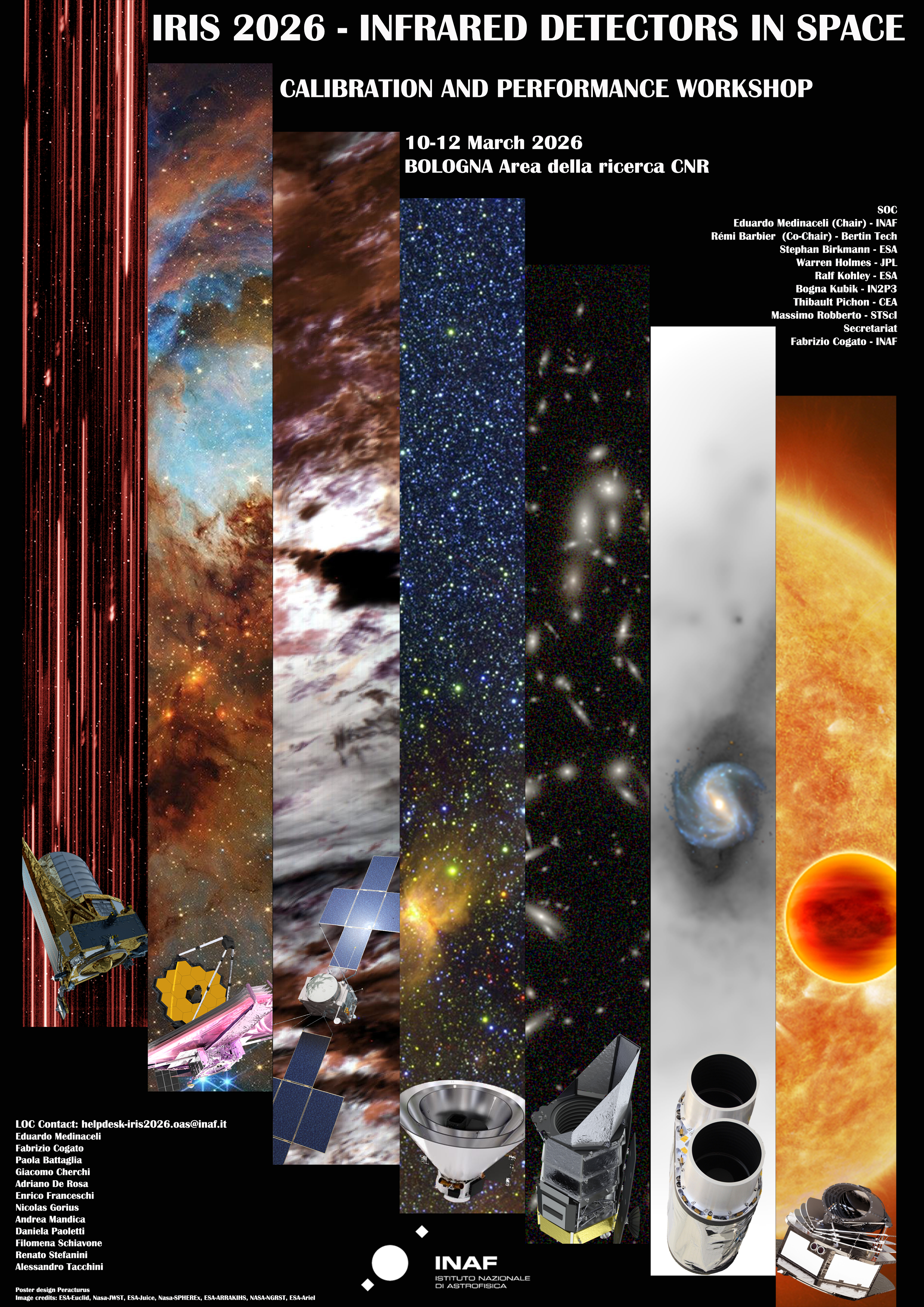
Review of operating and upcoming space observatories equipped with state-of-the-art infrared sensors.
The introduction of panoramic infrared detector arrays about 30 years ago has transformed our understanding of the Universe, from its fundamental physical processes to the origin and evolution of galaxies, stars, and planetary systems. Space missions designed to exploit the unique advantages of the cosmic environment have driven the development of successive generations of detectors with increasingly demanding performance requirements. By reviewing the history of these developments and the current state of the art, we can identify the technological advances that will enable the next generation of space telescopes.
The James Webb Space Telescope is an incredibly complex and powerful observatory, the development of which required decades of effort from thousands of technicians, engineers, and scientists. Despite its complexity, Webb was deployed flawlessly and is performing far better than the design requirements. That performance, combined with Webb’s versatile suite of instrument modes, enables transformational scientific investigations across the entire field of astrophysics. These investigations include the probing of phenomena in our own Solar System, the exploration of planets orbiting nearby stars, and the tracing of galaxy evolution from the local neighborhood out to the edge of the observable universe. The operations staff are dedicated to the optimization of the telescope's observing efficiency and the expansion of its capabilities, including the recent addition of a new mid-infrared slitless spectroscopy mode. Demand for observing time is shattering records, with nearly 3,000 proposals and a 13:1 oversubscription in response to the most recent solicitation. In this presentation, I will provide highlights of Webb's current status and discoveries, as well as its forward outlook, with operations projected to last into the 2040s.
The SpectroPhotometer for the History of the universe Epoch of Reionization and ices Explorer (SPHEREx) is the newest medium-class astrophysics mission in NASA’s explorer line. Launched in March 2025, SPHEREx surveys the entire celestial sphere spectroscopically, with R=41 to 130 measurements across the NIR, from 0.75um to 5um. This is enabled by two focal plane mosaics, each with three H2RGs mounted behind linear variable filters. They are read out using a custom Video 8 ASIC chip, designed for low correlated noise performance. The mission is optimized for three science goals: to constrain models of inflation through mapping the large-scale structure of the universe; to study the extragalactic background light through intensity mapping, and to survey the plane of the Milky Way for water and other biogenic ices. In this talk, I’ll give an overview of the mission and show some exciting early results from the first complete all-sky spectroscopic survey.
JUICE (JUpiter ICy moons Explorer) is the first large-class mission of ESA’s Cosmic Vision 2015–2025 program. It was launched in April 2023 and will arrive at Jupiter in July 2031. After a 3.4-year tour of the Jupiter system, JUICE will enter into a dedicated orbital phase around Ganymede for about one year. The primary goals of the mission are to investigate Jupiter’s complex magnetosphere and atmosphere, and to address the formation, evolution, and potential habitability of icy worlds by observing the different envelopes of the Galilean moons Ganymede, Europa, and Callisto.
One of the four remote sensing instruments on the JUICE payload is the Moons And Jupiter Imaging Spectrometer (MAJIS), a visible and infrared imaging spectrometer. In this presentation, we will describe the MAJIS instrument architecture and its high-level technical specifications. It operates using a VISNIR channel (0.5–2.35 μm) and an IR channel (2.28–5.56 μm), each based on a 1024×1024 pixel HgCdTe H1RG detector. The spectral sampling is 3.55–3.87 nm and 5.94–7.18 nm for the VISNIR and IR channels respectively. The instantaneous field of view is 150 μrad, yielding a 30 km wide swath with a maximum spatial resolution of 75 m/pixel at a 500 km altitude. A passive cryogenic optical design shall cool the optical head structure and the VISNIR detector to ~130 K, while the IR focal plane is cooled to ~85 K during scientific operations at Jupiter.
The Main Electronics (ME) unit manages complex onboard processing to ensure operational efficiency. This includes specialized compression units to handle the high data volume generated by the instrument, as well as a dedicated despiking procedure within the Proximity Electronics to maintain less than 1% corrupted pixels per frame caused by high-energy particles in the Jovian environment. Variable integration times, ranging from 100 ms for high-flux regions such as Jovian hot spots to several seconds for low signal observations (rings, exosphere) can be accommodated to these diverse observational conditions.
MAJIS achieves high signal-to-noise performance across its entire spectral range, as demonstrated by in-flight measurements during the initial cruise phase, including the Lunar and Earth gravitational assist in August 2024. Optimized for both close flybys and the stable orbital phase around Ganymede, MAJIS can operate in push-broom or scanning modes, the latter providing motion compensation for high-resolution observations. Ultimately, MAJIS is expected to deliver unprecedented hyperspectral datasets, leveraging these advancements to exceed the data collection rate of the Galileo NIMS instrument by a factor of 10,000.
This talk will present an overview and background of the Ariel mission and payload. Ariel is an ESA M-class science mission designed to conduct transit and eclipse spectroscopy of approximately 1000 transiting exoplanets in order to study the composition of their atmospheres. The payload consists of a 1m-class telescope which feeds two instruments - a combined photometer, guidance and low resolution spectrometer instrument operating from 0.5 - 2 microns, and a medium resolution IR spectrometer operating from 2 - 8 microns. Both instruments use dedicated, optimised IR MCT detectors.
I will give an overview of the Roman Space Telescope, with a focus on the 18 Teledyne H4RG-10 detectors of its flagship Wide Field Instrument. The science requirements for Roman-WFI are unprecedented in the level of calibration that they demand, from <0.1% knowledge of the observed point-spread function, to <0.4% nonlinearity over four orders of magnitude, to ultra-low persistence. I will summarize the importance of these requirements to Roman science and review the ongoing progress towards meeting them.
Arrakihs is an ESA Fast class mission designed to probe the nature of dark matter and the assembly of Milky Way–type galaxies through ultra-deep imaging of extremely faint stellar halos. By mapping diffuse halos, tidal streams, and satellite populations around nearby galaxies, Arrakihs will provide stringent observational tests of the ΛCDM paradigm in a regime where current surveys are strongly limited by surface-brightness sensitivity. This contribution presents the Arrakihs mission concept with a focus on the Near-Infrared (NIR) channels and its detector system, based on a 1.7 μm cut-off H2RG detector operated at ~150 K, selected to meet the demanding requirements on low noise, stability, and calibration accuracy required for ultra-low surface brightness science. We discuss the key detector performance drivers and system-level challenges, in terms of noise and power constraints, the impact of detector systematics on science return and readout architecture trade-offs to allow the use of the the H2RG science frames for fine guidance.
The European Space Agency’s (ESA) F-class mission Arrakihs aims to study the nature of galaxy formation, and the role of baryonic physics and dark matter by observing the faint structures within the halos of nearby MW-like galaxies at unprecedented depth. The required surface brightness is achieved by stacking multiple observations. The high image quality needed is obtained by the inclusion of a Fine Guidance System (FGS) within the control loop of the satellite’s Attitude and Orbit Control System (AOCS) during the science exposures. Four modified Maksutov-Cassegrain telescopes of 15 cm effective aperture simultaneously observe different wavelength bands. Two channels operate in the Near Infrared (NIR) using H2RG detectors, whereas the other two operate in the Visual (VIS) using CIS-300 detectors. The NIR channels are simultaneously used for the FGS, thus serving a dual purpose. The Arrakihs FGS will track the movement of multiple guide stars, which can be distributed over the entire detector area. The input data for the FGS is cut out of the full frames (FF) produced by the continuous periodic non-destructive readouts every ~1.5 seconds. Depending on the guide star’s location on the detector, it probes a different span in time and gets uniquely moved by rotation. The different quality of each guide star needs to be considered in the preparation of the data for the AOCS. The derived algorithms for acquisition and guiding are validated by simulation. The simulator used was based on the one developed for the ARIEL FGS [Mösenlechner et. al., SPIE 2024], with expanded functionality capturing the specific time and position dependent errors. This poster describes the design of the ARRAKIHS FGS task and the simulator used for development and testing, including the trajectory-based approach to star signal calculation.
Euclid acquires slew dark data after each observation sequence, when moving to a new field. The analysis of slew dark data can provide several valuable information, for instance for the study of transients (e.g., cosmic rays, snowballs). We developed an automatic pipeline capable of identifying and removing pixels affected by cosmic rays and grouping them into clusters. The identified clusters are then analyzed to retrieve several information (e.g., n° of pixels, total intensity, presence and distribution of saturated pixels) and to distinguish cosmic rays clusters from snowballs, whose nature is still under debate. The pipeline proved to be efficient regardless the number, size, or intensity of cosmic rays. The data collected from both slew dark and cosmic rays are stored in a ROOT file per day. We are now applying the pipeline to the slew dark data of the entire survey with the aim of producing large, robust datasets.
The Euclid and SVOM missions rely on advanced infrared detectors to achieve their ambitious scientific goals. Euclid’s NISP instrument, equipped with 16 H2RG detectors, aims to map billions of galaxies in the near-infrared, while SVOM’s CAGIRE camera, based on the French ALFA 2k×2k SWIR detector, enables rapid ground-based follow-up of gamma-ray bursts. CPPM has played a key role in characterizing and assessing the performance of both detector systems. A major challenge for these missions is persistence and anti-persistence, memory effects that distort pixel response after illumination. In Euclid, these effects introduce photometric and spectrometric biases, whereas in SVOM, they can also trigger false transient detections. Quantifying and understanding these phenomena is therefore critical to ensuring mission success. In this work, I analyze persistence and anti-persistence in both detector technologies. Using datasets from their scientific performance characterization, I developed a robust and reproducible methodology to measure these effects. This approach combines differential ramp construction, Savitzky–Golay filtering, and flux measurements to investigate the influence of detector temperature, illumination wavelength, signal level, and flux history. I will present this methodology, explaining how persistence and anti-persistence signals were isolated with minimal assumptions. The results provide quantitative insights into the amplitude, temporal evolution, and environmental dependencies of these effects across both detector types. These findings establish an empirical foundation for developing future correction strategies or pixel-level detector models, ensuring that Euclid and SVOM can meet their scientific objectives with the required precision.
Pyxel is an open-source python-based framework designed for simulating images including instrumental effects with a strong focus on detector modelling (CCDs & EM-CCDS, CIS, Hybrid-CMOS, APDs, MKIDs etc.). It has been conceived to easily integrate and pipeline models from multiple contributors and in this way foster collaboration in the instrumentation community. The development is led by ESA since 2017, with ESO joining rapidly the adventure before the first beta release. Since then and especially after the release of the v1.0 in 2021, the number of contributions and regular developers from the community has grown drastically. So far, Pyxel has been used in many different contexts: from end-to-end instrument simulation to specific detector studies, from instrument performance verification to data processing algorithm validation. In this presentation, we give an overview of the framework focusing on the main improvements and evolution since v1.0 and examples of new features. On top of the many models that were added to the framework, the pipeline hosts now to two new model groups “scene generation” and “data processing” to make the framework even more self-consistent.
Many space telescopes incorporate Fine Guidance Sensors (FGS) in their payload, which provide Line of Sight (LoS) measurements of the observed target to the spacecrafts Attitude and Orbit Control System (AOCS) for continuous correction. In many recent and upcoming Space Missions such as Ariel, these FGS's utilize MCT Infrared Detectors. In order to develop and tune the algorithms that will determine the target position as part of the Ariel FGS's Application Software (ASW), simulating the detectors Field of View becomes indispensable. While Ariel already has a very competent simulation suite for the MCT detectors with Exosim2, this suite is unfortunately not well suited for the later stages of FGS/AOCS testing and development, where the simulators are often integrated in large simulation benches. Here, resource consumption and execution time become critical and closed loop capability is needed, where the simulated Field of View is updated in real time by the spacecraft attitude reported by the AOCS. In order to fill this gap, we present our simulation suite that acts as a complement to Exosim2. The High Fidelity Simulator (HFS) is fed by stellar signals determined using Exosim and uses them in combination with a MCT detector model to provide faster than real time simulation of the FGS Focal plane with very little resource consumption on a single CPU core. This allows the HFS to be integrated in simulation environments used by the spacecraft supplier and the Electronic Ground Support Equipment of the FGS through the use of a Front End Electronics Emulator, allowing the ASW to control the simulator in the same fashion as the real detectors.
The latest advances in infrared detectors and front-end electronics technologies are presented, along with their prospective use in future mission concepts.
This talk presents Teledyne's heritage in space missions, the suite of IR FPAs that are at readiness levels TRL-6 to TRL-9, and developments underway that may benefit future missions.
Leonardo has a long heritage of IR detector manufacture for flight missions. This session will detail recent launches as well as roadmaps for the future.
The presentation will cover the latest activities and developments taking place at Markury Scientific. Topics will include specialized HxRG detector readout schemes using custom SIDECAR ASIC firmware, supporting missions such as ARIEL, NEO-Surveyor, and ARRAKHIS. Furthermore, the MCE and MACIE drive electronics systems will be discussed, providing single or multi-ASIC control solutions for both the SIDECAR and the ACADIA ASIC.
Since the 1990s, CEA-LETI has been involved in the development of HgCdTe (MCT) detectors for space and scientific applications, in collaboration with Lynred. For instance, CIRS was a 7-18 µm PC retina manufactured at LETI and sent onboard the Cassini-Huygens probe to study the temperature of Saturn's rings. Subsequently, LETI participated extensively in the development of MTG detectors, with a particular focus on the VLWIR spectral band, which was recently initiated for the purpose of atmosphere chemistry sensing in weather forecasting. In addition, LETI was at the forefront of the development of MCT eAPDs for adaptive optics, with the RAPID detector operating within the SWIR range at a speed of 1.5 kHz. Since 2015, the retina in question has been installed on the PIONER VLTi instrument in Paranal. In recent developments, LETI and Lynred have successfully engineered the ALFA detector, a SWIR 2kx2k focal plane array designed for the detection of low flux. The ALFA array has been dispatched to Mexico for utilisation in the CAGIRE camera, which is specifically designed for the observation and analysis of gamma-ray bursts. In recent times, the emphasis of our developmental efforts has been directed towards the conceptualisation of an entirely novel MCT diode process flow, with the objective of enhancing the performance metrics from SW (2.5 µm CO) to VLWIR (15.5 µm at 80 K). The process flow, here designated NG, has been optimised with the objective of reducing process-induced defects in MCT diodes. The result is a high degree of stability for high flux applications and low persistence in the low flux case. In addition, the capacity to attain a remarkably low dark current in LW (fractions of e/s for 8.5 µm CO at 35 K) with this structure was demonstrated. Concurrent with the imaging activities, eAPDs are being optimised for free space communications or quantum applications, with the objective of achieving photon counting. The lessons learned from these developments are currently being investigated for imaging applications targeting earth observations using the COBRA ROIC from Lynred. In addition to the development of MCT arrays, LETI is collaborating with IIIVLab and Lynred on the research and development of antimony-based T2SL technology for high operating temperature tactical applications in the MW range (5 µm at 130 K). Furthermore, LETI is engaged in the research and development of InGaAs arrays for mass market smartphone applications. In this presentation, we will provide a concise overview of our recent advancements in the field of IR imaging detectors. This will include an exposition of our endeavours in radiation hardness studies of MCT detectors and the analysis of low frequency stability (RTS, LF noise, etc.).
The purpose of the Infra-Red Telescope (IRT) on board THESEUS is to identify, localize and characterize astrophysical transient sources and in particular the afterglows of the Gamma-ray Bursts detected by the Soft X-ray Imager (SXI) and the X and Gamma Imaging Spectrometer (XGIS) on board THESEUS. The Infra-Red Telescope is a 0.7 m class telescope observing in the 0.7 – 1.8 microns band, with both imaging and moderate resolution spectroscopy capabilities in the 0.8-1.6 microns band. The camera includes 5 filters to estimate on-board the redshift of the source with a photo-Z imaging technique, as well as a grism to perform spectroscopy of the brightest sources. The focal plane assembly includes a Teledyne H2RG detector read out by SIDECAR front-end electronics. The detector area of 2048 x 2048 pixels is used to include both the photometry field of view of 15 arcmin x 15 arcmin, and a separate area for the spectral dispersion information. Outside the camera, images are analysed to localise in real time the transient source by using an on-board astrometry algorithm.
Different approaches to data acquisition and signal estimation strategies are compared, with particular emphasis on innovative techniques.
The SPHEREx studies of the extragalactic background light are designed to probe anisotropies on scales between 5 and 20 arcminutes. They are therefore susceptible to any noise with power on those scales. Traditional raster scan H2RG readout schemes place power from 1/f drifts directly in this spatial signal band given the SPHEREx plate scale. We therefore have developed an alternate readout scheme called row chopping that modulates the angular scales which 1/f noise manifest on. In this talk, I’ll walk through the SPHEREx readout implementation and detail how row chopping improved performance.
The Euclid mission relies on the Near-Infrared Spectrometer and Photometer (NISP) to deliver high-precision photometric and spectroscopic measurements from the Sun–Earth L2 point. NISP employs a mosaic of 16 H2RG detectors and processes data onboard through a dedicated hardware–software architecture designed to satisfy stringent constraints on computational resources, telemetry bandwidth, and scientific performance. Central to this architecture is the NISP signal estimator, an ad-hoc algorithm that provides flux measurements together with a quality factor (QF) assessing the reliability of the estimation.
This presentation examines the performance of the NISP signal estimator during early flight operations. Results show that, over a wide range of incoming flux, the estimator exhibits a systematic bias well within the instrument noise budget, i.e., lower than 0.01 e/s for 99% of the detector pixels. Finally, this presentation introduces a framework to interpret the QF parameter, exploring its sensitivity to the NISP signal estimator bias, and demonstrating its response to spurious sources, like cosmic rays, snowballs, and persistence signal.
This presentation addresses the end-to-end signal detection chain, from photon collection to calibrated science data, with emphasis on detector readout architectures and on-board processing strategies as used by the MAJIS instrument onboard ESA’s JUICE. We will illustrate how extreme dynamic range, low photon flux regimes, and radiation-induced transients drive detector operation choices. Correlated double sampling and sub-integration-based acquisition schemes are examined, with particular focus on precision and statistical consistency relative to noise models.
Detector characterization activities are discussed in the context of identifying and mitigating systematics such as reset anomalies and channel-dependent offsets. End-to-end pre-launch characterization strategies are presented as a prerequisite for reliable in-flight performance. In-flight calibration approaches based on frequent background and dark signal monitoring are described. Emphasis is placed on the co-design of detector operation, front-end electronics, readout timing, and calibration strategy. This performance could provide guidance for the development of future infrared instruments operating under similarly demanding observational constraints.
We characterize cosmic ray interactions in blanked-off JWST NIRSpec "dark" exposures. In its Sun/Earth-Moon L2 halo orbit, JWST encounters energetic ions that penetrate NIRSpec's radiation shielding. The shielded cosmic ray hit rate decreased from approximately 4.3 to 2.3 ions/cm^2/s during the first three years of operation. A typical hit affects about 7.1 pixels necessitating mitigation during calibration and deposits around 6 keV in the 5.4 µm cutoff HgCdTe detector material (equivalent to ~5200 charges). The corresponding linear energy transfer is about 0.86 keV/µm.
Galactic cosmic ray flux is expected to increase as solar activity declines, leading to an anticipated rise in the NIRSpec rate from 2.3 to 4.3 ions/cm^2/s by early 2027 and potentially reaching ~6 ions/cm^2/s in the early 2030s. We investigate rare, large "snowball" hits and, less frequently, events with secondary showers that pose significant calibration challenges. We explore their possible origins as heavy ions, secondary particles from shielding, or inelastic scattering in the HgCdTe detector material. We discuss the implications of these findings for future missions including the Nancy Grace Roman Space Telescope.
Since the launch in July 2023, Euclid operations were characterized by an intense solar activity. Solar energetic particles (SEP), hitting the sixteen H2RG detectors of the Near Infrared Photometer and Spectrometer (NISP) instrument, contribute to the scientific signal noise. In the most extreme cases, making NISP data invalid for scientific purposes. In this talk, we will present a comprehensive analysis of NISP dark images collected from August 2023 to date which aims to study the possible correlation of NISP artifacts with SEP. In particular, snowballs are bright transient events of mostly circular shape, with a nearly or fully saturated core, and covering tens to hundreds of pixels. By exploiting an ad-hoc algorithm that combines the NISP signal and quality factor, snowballs and cosmic rays candidates were identified in the NISP images Since their physical origin is still under debate, we correlate the snowball rate with SEP flux measurements from GOES satellite. An eventual correlation could explain the observed difference with the snowball rate measured on NISP ground based tests.
Pyxel is an open-source python-based framework designed for simulating images including instrumental effects with a strong focus on detector modelling (CCDs & EM-CCDS, CIS, Hybrid-CMOS, APDs, MKIDs etc.). It has been conceived to easily integrate and pipeline models from multiple contributors and in this way foster collaboration in the instrumentation community. The development is led by ESA since 2017, with ESO joining rapidly the adventure before the first beta release. Since then and especially after the release of the v1.0 in 2021, the number of contributions and regular developers from the community has grown drastically. So far, Pyxel has been used in many different contexts: from end-to-end instrument simulation to specific detector studies, from instrument performance verification to data processing algorithm validation. In this presentation, we give an overview of the framework focusing on the main improvements and evolution since v1.0 and examples of new features. On top of the many models that were added to the framework, the pipeline hosts now to two new model groups “scene generation” and “data processing” to make the framework even more self-consistent.
Accurate modeling of detector is essential for precision astronomical measurements and instrument design. We present PyXim, a Python simulation package designed to reproduce the behavior of HxRG CMOS detectors and ASICs at the pixel level, incorporating key noise sources and instrumental effects relevant to image analysis and photometry. The framework models the full signal chain, from photon and charge generation through photo- and sense-node conversion up to the ADC. Its modular architecture enables the setup of varying model complexity and fidelity. A strong effort is put on performance, relying on JAX as a compute backend, enabling the simulation to run on accelerators such as GPUs. Furthermore, automatic differentiation opens the door to full forward modeling for precision parameter inference from ramp data.
Support activities for detector development, including testing and characterisation, are discussed. Specific methodologies for assessing key detector effects are presented, along with the main simulation toolkits for infrared detectors.
Building on the remarkable achievements of Gaia in mapping the Milky Way in multiple dimensions, and in alignment with the ESA Voyage 2050 science programme, advancing galactic astrometry into the near-infrared has emerged as a promising direction for the fourth ESA large class mission. Achieving this goal will depend on significant progress in the development of the mission's detection chain, requiring technologies capable of delivering high-speed, low-noise, and high-precision measurements in the near-infrared range. At the ESA payload validation section (SCI-FIV) in ESTEC, substantial work has focused on strengthening the capabilities of European infrared detectors, with large array, linear mode avalanche photodiodes (LmAPD) in a Mercury Cadmium Telluride (MCT) substrate standing out as a particularly promising solution to meet the demanding mission requirements. This presentation will show the main challenges, results, and way forwards coming from the characterisation performed over the past year.
Presentation of the characterisation of the 2kx2k LmAPD array and the University of Hawaii Characterisation of the 1kx1k LmAPD array for low flux Astronomy.
CEA LETI develops second-generation cooled infrared focal plane array (FPA) technologies for high-performance imagers, targeting defense, Earth observation from space, and astronomy. Our technology covers the infrared spectrum from Short-Wave InfraRed (SWIR) to Very Long Wave InfraRed (VLWIR, 18µm cutoff). The entire process flow, from substrate and epilayer growth to Read-Out Integrated Circuit (ROIC) design and hybridized array assembly, is performed in-house. To provide a comprehensive assessment of the technological choices explored, we employ state-of-the-art electro-optical characterization means and expertise. This capability is further supported by our in-house production of dedicated single diode test chips, as well as full arrays featuring multiple pixel designs. It allows us addressing not only first-order figures of merit (Quantum efficiency (QE), dark current, and temporal noise…) but also second-order performance metrics and exotic parameters. This presentation will focus on advanced characterization techniques specifically developed for astronomy. We will discuss SWIR QE metrology, Point Spread Function (PSF) and intra-pixel response characterization using spot-scan and Electron Beam Induced Current (EBIC) techniques, as well as persistence measurements and associated trap properties analysis. These methods enable a deeper understanding of detector performance and guide the optimization of infrared imaging technologies for demanding applications.
ARRAKIHS is an ESA fast mission selected in 2022 to analyze the nature of dark matter and galaxy formation through ultra-low surface brightness observations. Achieving the mission’s scientific goals requires stringent performance from the infrared focal plane. This work presents the current detector characterization activities for the ARRAKIHS mission, focused on the setups developed to operate a Teledyne H2RG FPA readout with a SIDECAR ASICs. The characterization will be carried out at the Institut de Física d’Altes Energies (IFAE), with the support of ESA and the ARRAKIHS AMC team (ICE-IEEC and IFCA), where a dedicated Ground Support Equipment (GSE) and cryogenic test setups are under development. The facilities enable full detector operation under representative conditions and support measurements of key performance parameters, including readout noise, gain, dark current, linearity, persistence, and quantum efficiency.
Detector performance typically accounts for a significant part of an instrument’s overall performance, and thus has a major impact on mission success. For missions like Euclid, which demand exceptional precision and accuracy in flux measurements, it is essential to minimize and control detector systematics as rigorously as possible. To achieve this, pre-launch ground characterization enables measurements that cannot be obtained in flight. Specifically, environmental and test conditions can be precisely controlled and varied to gain deeper insights into individual detectors—and even individual pixels. Beyond standard parameters like quantum efficiency (calibrated in flight), noise and dark current (regularly checked in flight), and non-linearity (corrected in flight), effects such as interpixel capacitance and persistence can also introduce biases in measured flux. These must be carefully accounted for in the data processing pipeline and will be discussed here.
ESO has characterized upwards of 15 H4RG detectors with 15 µm pixels and 2.5 µm cut-off material. The ELT’s MICADO and HARMONI instruments require 17 of these detectors. We have constructed a purpose-built IR test facility, called FIAT, to allow full detector characterization. In the most recent period, we have now fully characterized 10 H4RG-15 detectors, for the MICADO instrument, in this facility, from temperatures of 40K to 85K. We have measured the usual detector performance parameters but also looked in detail at the output buffer glow issues, crosstalk between channels, high contact resistance pixels, the effects of the crosshatch pattern, persistence, and hot pixel effects. This talk will give an overview of this testing and characterization.
Overview of the mission-specific approaches for end-to-end characterisation of the detection chain.
The ARIEL space mission promises to provide the astronomical community with a large uniform sample of exoplanet transmission spectra covering the near- and mid-infrared wavelength range of 1.1 to 7.8 micrometers. In addition to its three spectroscopic channels, ARIEL has three photometric channels that will measure the optical and near-IR flux from the host star with the aim to monitor the spacecraft absolute pointing as well as to correct the exoplanet spectra for the variability of their host star. In order for ARIEL to fulfill its promise, the end-to-end performance is currently being verified at instrument (sub-system) level and will be verified again at the Integrated System level. Stringent requirements in optical and thermal stability come with unique challenges and the test facilities and ground support equipment must reflect those needs. In this presentation I will link the on-going instrument tests to the Integrated System level tests, I will discuss the challenges of System-level requirement verification for the ARIEL mission, and will present the path forward for the ARIEL calibration and performance testing effort.
The presentation briefly describes ground calibration activities of FGS subsystem of ARIEL space mission.
Required tests will be outlined and OGSE required for tests will be presented.
Arrakihs is an ESA fast-class mission aimed at probing dark matter and the formation of Milky Way-type galaxies through ultra-deep imaging of faint stellar halos. By providing statistics on tidal streams, diffuse halos, and satellite populations, the mission will test the ΛCDM framework. This work presents the preliminary validation results of the NIR channel using a 1.8 µm cut-off H2RG prototype operated at 150 K, comparing different configuration modes in terms of noise and signal integrity. The electro-optical characterization includes PTC, linearity, full well, IPC, and dark current.
Case studies illustrating how detector systematics propagate through data processing and calibration pipelines, and how they impact overall performance.
The Euclid mission aims to deliver high-precision spectroscopic measurements to probe the geometry and evolution of the Universe. Achieving this objective requires a detailed understanding and mitigation of detector-induced effects that can bias spectroscopic data products. This work investigates the impact of key detector effects on the Euclid Near-Infrared Spectrometer and Photometer (NISP) spectroscopic data processing chain. We assess how these effects propagate through calibration and extraction steps.
Case studies illustrating how detector systematics propagate through data processing and calibration pipelines, and how they impact overall performance.
In this talk we present improvements to the STScI JWST pipeline for extremly deep exposures. Although we focus on NIRSpec observations with the micro-shutter array (MSA) for the GARDEN Survey, most of the results are also directly relevant for other instruments. GARDEN's extremely deep and highly dithered exposures of faint targets, namely intermediate redshift galaxies, are an ideal data set to optimize the data reduction process. In this paper we discuss the updates we have made to the JWST data reduction pipeline that increase the signal-to-noise of the output science products. Overall, we updated twelve calibration reference files and developed nine new software enhancements to the JWST data reduction pipeline that significantly improved the outcome. The various enhancements have several themes in common. The first theme is that most calibration reference files are based on algorithms that did not fully represent the underlying physics of the detectors. This is primarily due to not carefully masking bad pixels and not using contemporaneous calibration observations. Another theme is that the current pipeline did not have any masking of samples that are affected by persistence from cosmic rays and snowballs. We also developed a method to measure and correct for thermal variations that cause large scale imprints in the images. The final theme is residual amplifier effect from bias jumps, 1/f noise, and even/odd row biases. To measure the improvement of our corrections we combined a set of 5-point dithers in an unilluminated region of the detectors to form a pseudo-mosaic for both a JWST Archive reduction and our GARDEN reduction. When we compared the standard deviations of the unilluminated regions with the two reductions, we see factor of sixty decrease in the standard deviation of the rate measurements.