List of confirmed speakers:
 Annalisa Bonafede is Full Professor of Astrophysics at the Department of Physics and Astronomy of the University of Bologna. Her research focuses on extragalactic astrophysics, with particular emphasis on extragalactic magnetic fields, non-thermal properties of galaxy clusters, and radio observations across a broad frequency range. She has held research positions at the University of Hamburg and INAF, and has led internationally recognized research projects funded by the European Research Council, including the ERC Starting Grant DRANOEL (2017-2022) and the ERC Consolidator Grant BELOVED (2025 - now), which aims at understanding the origin and amplification mechanisms of magnetic fields during the assembly of structures, from protoclusters to massive clusters in the local Universe. Her work combines radio observations and numerical simulations to investigate the origin and evolution of magnetic fields and cosmic rays in the largest structures of the Universe.
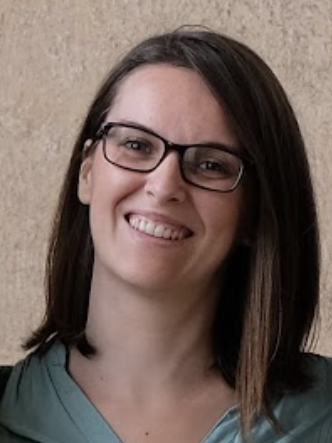 Marisa Brienza is a researcher at the INAF Institute for Radio Astronomy in Bologna. Her research focuses on the life cycle of jets produced by supermassive black holes and their impact on galaxies and the surrounding intergalactic medium. She is also an expert in the study of the evolution of the old remnant plasma left behind by these jets, how this plasma interacts with the intragroup and intracluster medium, and the origin of associated filamentary non-thermal emission recently discovered. Her work relies on low-frequency radio observations from major international facilities and SKA precursors and pathfinders and she is an active member of several international radio survey collaborations.
 Rossella Cassano is a Senior Researcher at the INAF Institute for Radio Astronomy in Bologna, Italy. Her research focuses on the physics of galaxy clusters, with particular emphasis on the origin of diffuse radio emission, particle acceleration, turbulence, and magnetic fields in the intracluster medium. She combines theoretical modelling with multi-wavelength observations to investigate the connection between cluster mergers and non-thermal phenomena. She has played a leading role in the development of the scientific case for galaxy cluster studies with current and next-generation radio facilities, including LOFAR and the Square Kilometre Array (SKA), and is actively involved in several international collaborations aimed at unveiling the non-thermal Universe.
 Marta De Simone is an observational astrophysicist working on star and planet formation, with a focus on the chemical evolution of young planetary systems. Her research combines astrochemistry and high‑resolution radio interferometry using facilities such as ALMA, NOEMA, and the VLA to characterise the gas and dust in protostars and their outflows and surroundings.Her work integrates observations, radiative transfer analysis, and the interpretation with astrochemical modelling, supported by a strong interdisciplinary approach. She graduated at the university of Florence, did her PhD in Grenoble University in France and was an ESO-Garching Fellow. Now she is an astronomer at ESO working in the Alma Regional Center.
 Fabio Gastaldello is a staff researcher at INAF-IASF Milano and his area of scientific expertise is the investigation of the physical properties of clusters and groups of galaxies, which represent the current endopint of cosmic structure formation. The main baryonic component of these systems, the hot gas constituting the intra-cluster and intra-group medium, is investigated through X-ray and SZ observations. During his scientific career he gained considerable experience in the X-ray data analysis having analyzed data from the major X-ray satellites in orbit in the last 25 years. His interests range from the mass determination of clusters and groups, AGN feedback, chemical enrichment and non-thermal emission and particle acceleration in these systems. He is also particularly active in the mission design and background characterization and minization of the ESA's future flagship X-ray mission NewAthena.
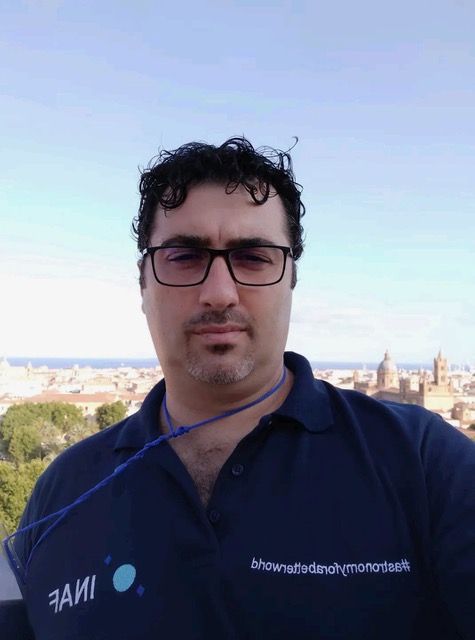 Mario Giuseppe Guarcello is a Senior Astronomer at INAF - Astronomical Observatory of Palermo. His main research interest is the study of star-forming regions and young stellar clusters, with a particular focus on massive regions and environmental feedback on star and planet formation, as well as early stellar evolution. Over the past few years, he has been leading the EWOCS project, which is based on multiwavelength observations of supermassive star clusters and currently counts more than 60 participants and several scientific products. He also leads the local unit participating in IADC activities for space debris monitoring.
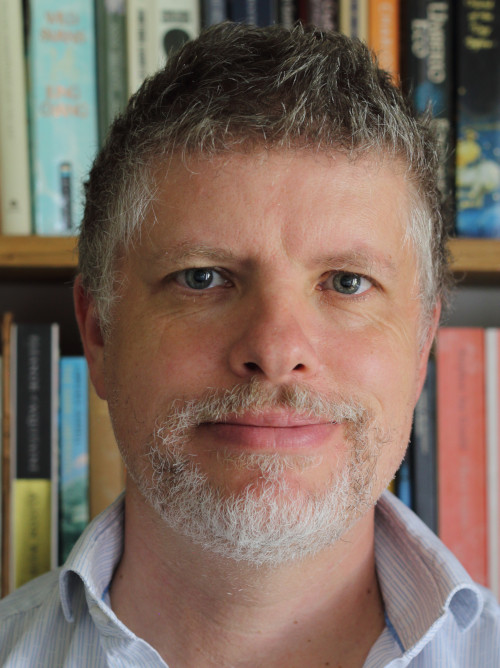 Martin Hardcastle is a professor of astrophysics at the University of Hertfordshire in the UK and a specialist in the physics of radio AGN. He has worked in observations of AGN from radio through to gamma-ray, as well as numerical modelling and theory. At the moment he is particularly focussed on the insights to be gained about AGN populations from large-area sky surveys.
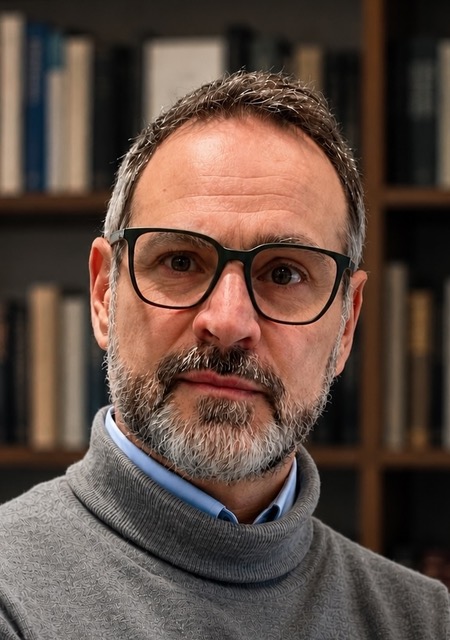 Giuseppe Lodato is Professor of Astrophysics at the University of Milano. He is a theoretical astrophysicist, interested in fluid dynamics and in the theory of accretion disks around young stars and black holes, and in the theory of planet formation. He obtained his PhD at the Scuola Normale Superiore, Pisa, and has held positions at the University of Cambridge and at Leicester University, before taking up his current position in Milano.
 Sergio Molinari is Research Director at INAF-IAPS in Rome. Expert in Galactic star formation, he has been leading major observational Galactic Plane surveys with Herschel and ALMA, as well as coordinating EU-funded international Projects.
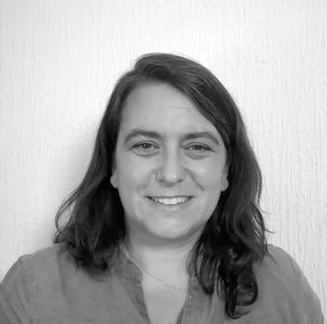 Veronica Roccatagliata is assistant professor at the University of Bologna. She is an observational astrophysicist expert on star and planet formation. In the last years she is particularly interested in the formation of protoplanets and their relation to solar system analogs, the so-called debris disks. She obtained her PhD at the University of Heidelberg working on her thesis at the Max-Planck-Institute for Astronomy, and she has held positions at the Space Telescope Science Institute in Baltimore, the Ludwig Maximilian University in Munich. Back to Italy with as an Astrofit fellow at INAF at the Osservatorio Astrofisico di Arcetri, she was assistant professor at the University of Pisa.