Description
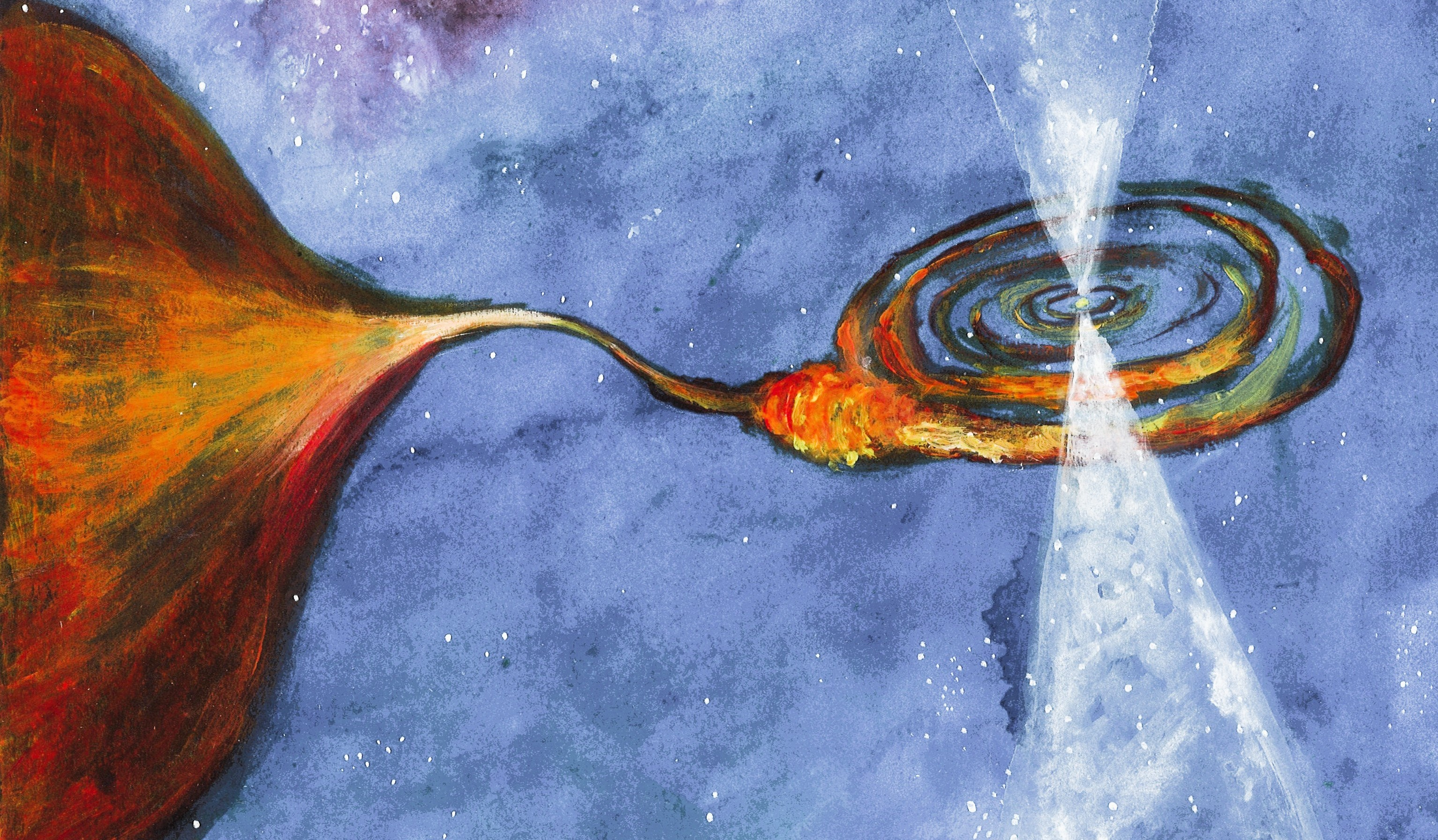
Accretion onto compact objects is a fundamental process in astrophysics, powering some of the
brightest sources in the sky. It also drives powerful outflows that can shape the surrounding
environment, making accretion central to the broader inflow–outflow cycle. In recent years, subsecond
optical and infrared observations of accreting X-ray binaries have opened a new window
onto this connection, uncovering a rich variety of previously inaccessible phenomena. For example,
the discovery of a 0.1 s lag between the X-ray and optical/infrared variable emission has
provided a powerful probe of the inner jet physics, while also placing constraints on the jet speed
and inclination. In this talk, I will review the current observational picture and discuss the main
physical components responsible for rapid optical/infrared variability. I will then show how new
data are placing stringent constraints on the properties of jets and accretion discs, highlighting the
need for more realistic physical models.