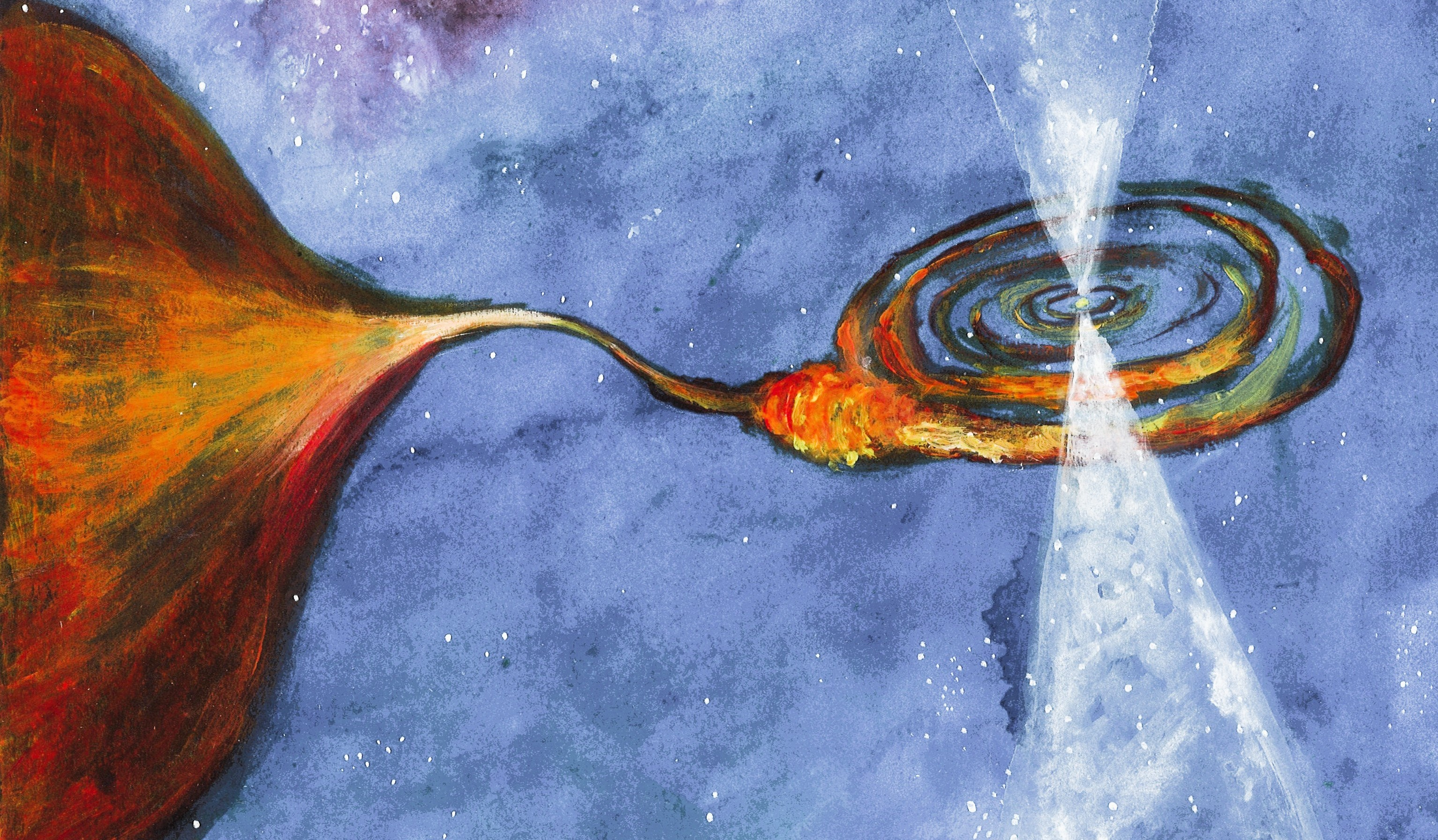
Description
High-time resolution astronomy in the visible band has historically been limited by the readout
scales of standard detectors. SiFAP2, a fast optical photometer based on Silicon Photo-Multipliers
mounted at the 3.58m Telescopio Nazionale Galileo, overcomes these constraints by recording individual
photon arrival times with a sub-nanosecond resolution. This instrument has been pivotal
in investigating the rapidly variable optical sky, particularly in the study of millisecond pulsars
(MSPs). This talk reviews the key milestones of SiFAP2, starting from the discovery of the first
optical millisecond pulsations from the transitional MSP PSR J1023+0038, which overturned our
understanding of the emission mechanisms in these systems. The enigma has only deepened with
the subsequent detection of optical pulsations from two other sources: the accreting MSP SAX
J1808.4-3658 and the rotation-powered MSP PSR J2339-0533. We now face a scenario where three
distinct systems exhibit optical pulsations that appear to stem from different physical processes,
prompting a deeper exploration of the pulsar-disk interaction and the search for new candidates
to test current theoretical models.