The 3rd edition of the Observing with Adaptive Optics international school will take place at the Astrophysical Observatory of Asiago in Italy from 25th to 30th of October 2026.
Although still a young initiative, the school is quickly becoming a highly anticipated event within the international Adaptive Optics student community. This year, the school is moving to Italy and expanding its horizons.
During the school the students will use EKARUS, the successor of the PAPYRUS Adaptive Optics testbench, installed in the Coudé room at the Copernico 1.82m telescope.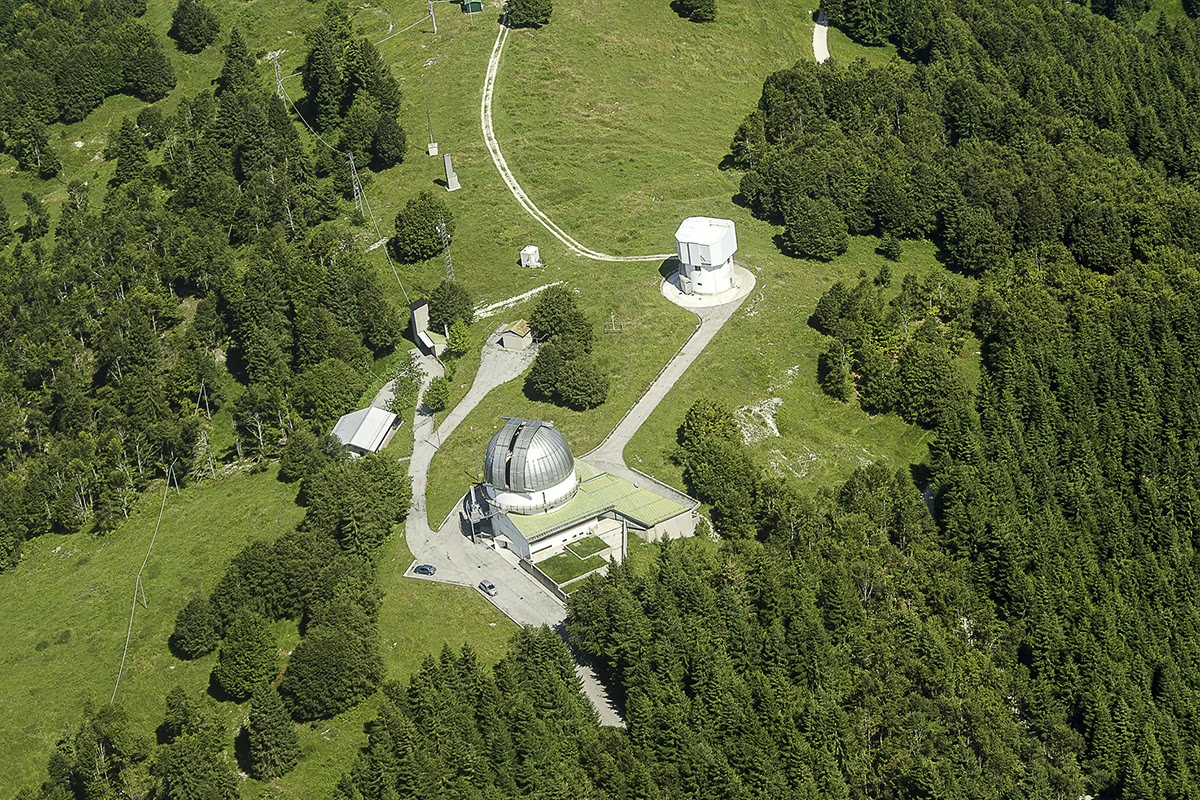
The students will be involved in all phases of an adaptive-optics assisted astronomical observation. Frontal lessons on the fundamental topics of the discipline are planned, as well as tutoring sessions for the development of observation preparation, AO simulation and data analysis tools.
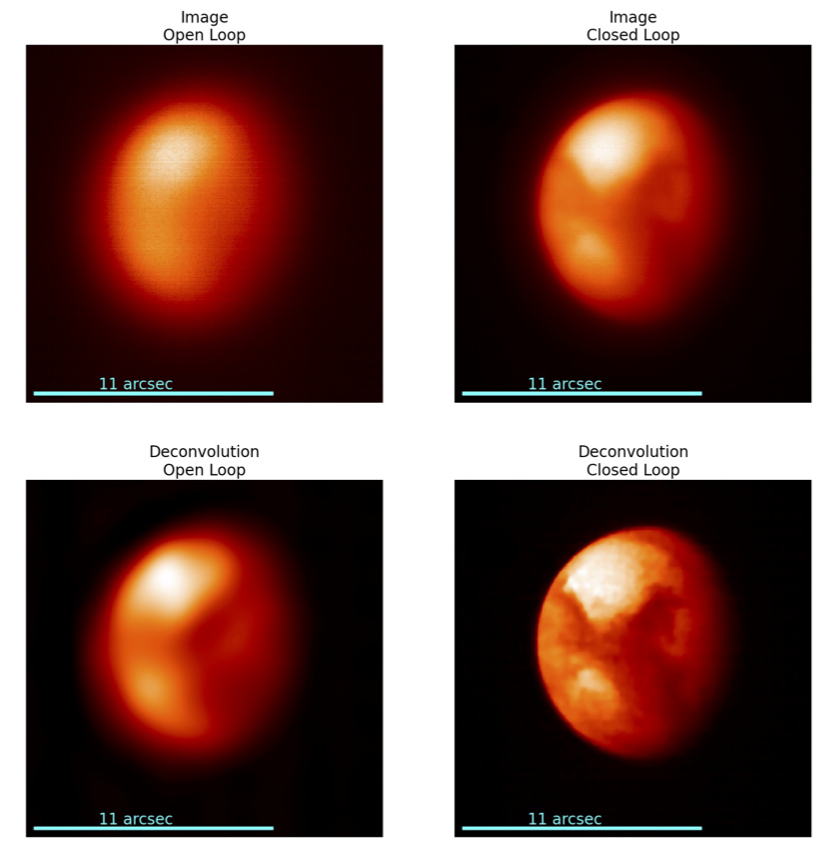
Observation of Mars with Papyrus on T152 telescope at OHP
Audience
The summer school is aimed at two audiences:
1) young astronomers who in their careers will primarily use adaptive optics-assisted instruments and are interested in understanding the strengths and limitations of adaptive optics instruments
2) young technologists who will develop the next generation adaptive optics systems and are interested in understanding how an adaptive astronomical observation is carried out, from preparation to data analysis.
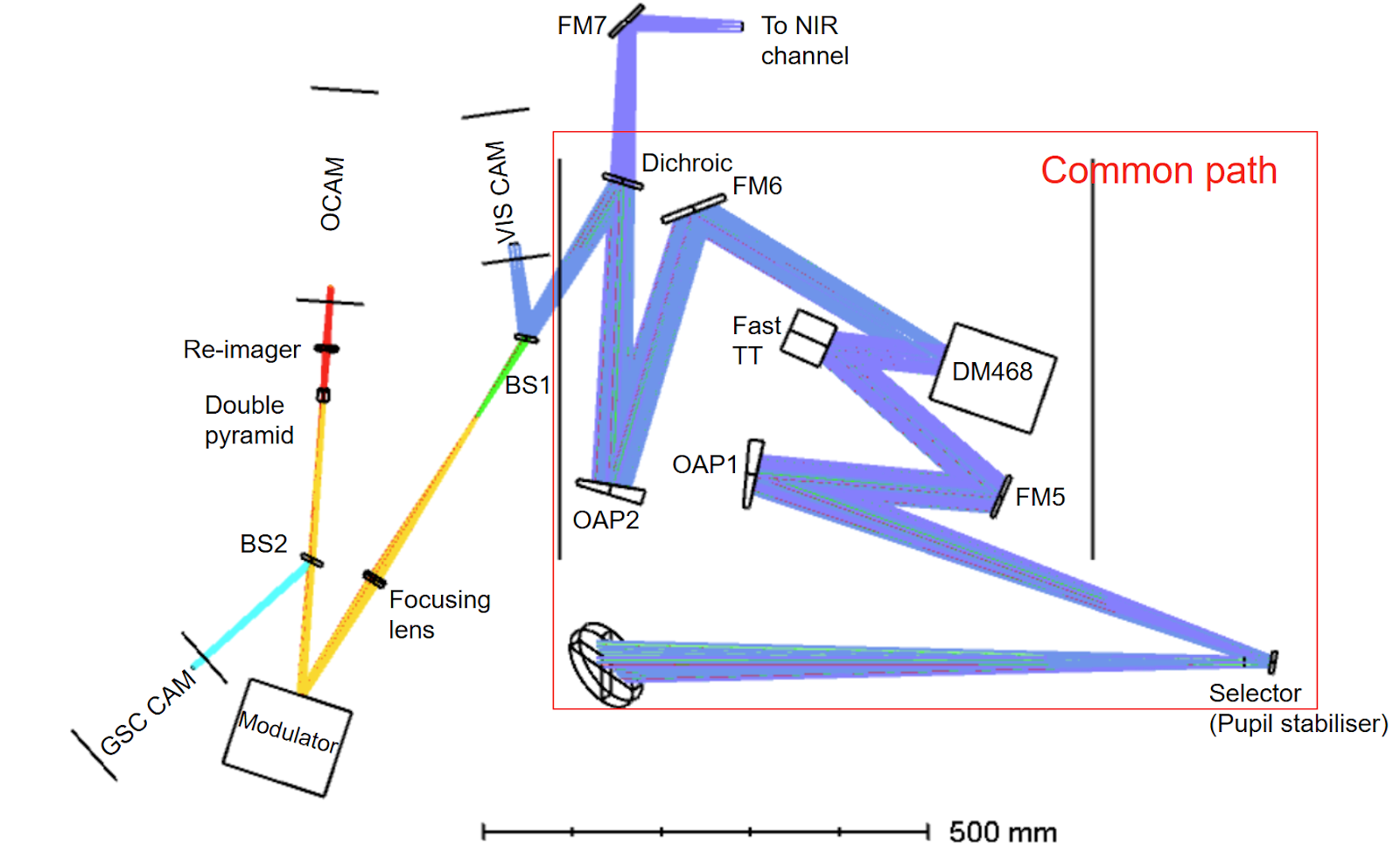
Optical scheme of Ekarus
Topics
The tentative list of topics that will be addressed is the following:
- Imaging and IFU spectroscopy with an AO-assisted instrument
- Geometrical and diffractive optics for ground-based telescopes
- Image formation through the atmosphere
- Fundamentals of Control Theory for astronomical AO
- Wavefront sensing in AO for astronomy
- Wavefront reconstruction in AO for astronomy
- AO system design
- Image deconvolution in astronomy: PSF reconstruction, PSF modeling & fitting
- Beyond general-purpose AO or how to address the specific limitations of AO: High contrast / Wide field / Laser assisted AO
- Real life examples of AO-assisted instrument development
-
Application of AI in AO
Cost and accomodation
The students will be hosted at the Asiago Observatory facilities. The number of students will be limited to about 25.
Apart from travel to/from Padova, all other expenses will be covered by the organization. The organization provides a shuttle bus from/to Padova train station on the days of arrival and departure
Important dates
- 27 Apr 2026 - Registration Open
- 12 Jun 2026 - Registration closed
- 29 Jun 2026 - Registration confirmation
- 25 - 30 Oct 2026 - School
Supported by