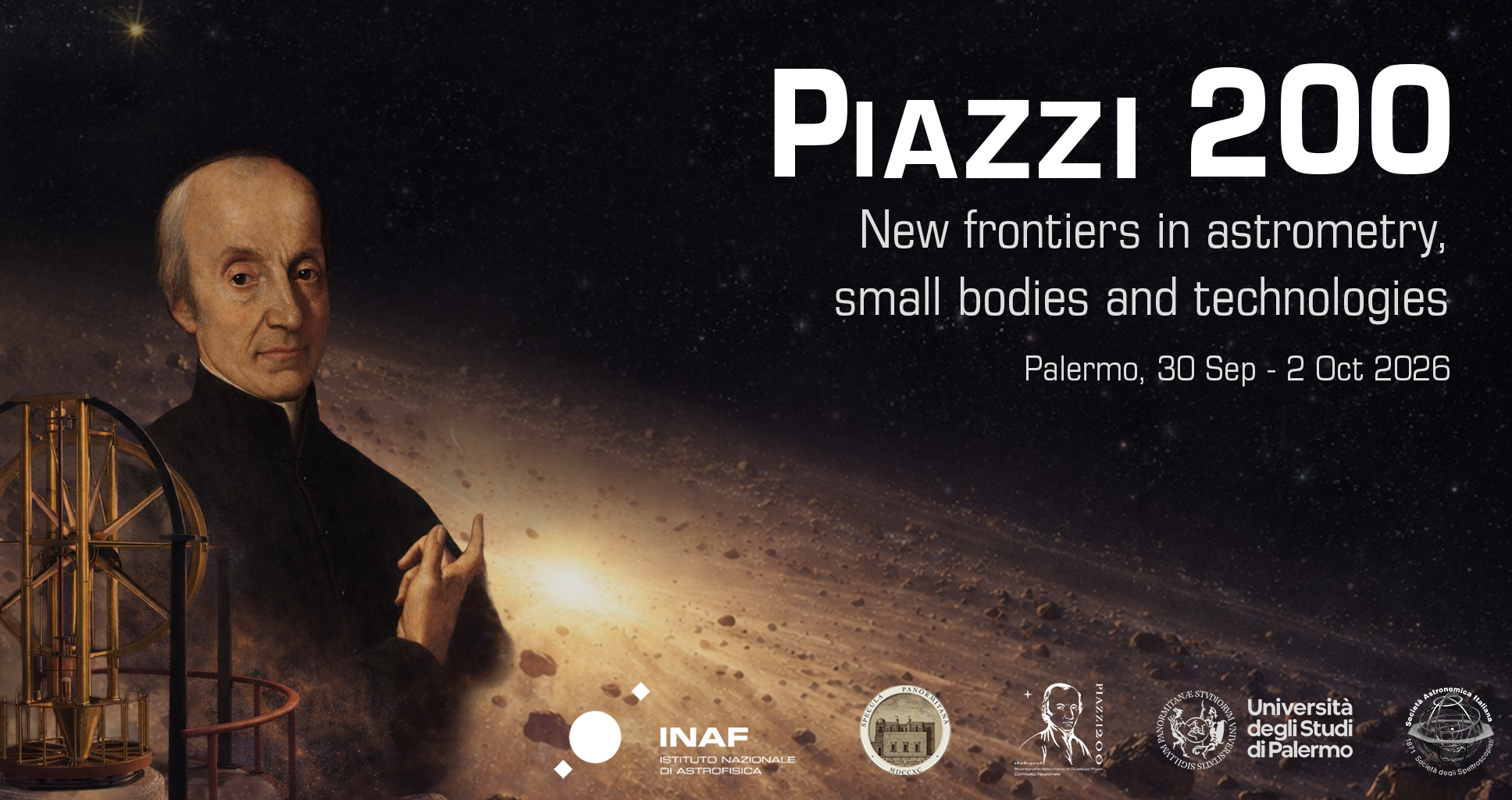
At the end of the Twentieth Century, the Hipparcos space astrometry mission set the precision standards for positional astronomy for about 100,000 nearby stars at the milli-arcsecond (mas) level, a net improvement of three orders of magnitude with respect to thearcsecond-level precision available to Giuseppe Piazzi in his discovery of Ceres in 1801. A quarter Century later, the Gaia mission has pushed astrometric precision by two more orders of magnitude, materializing a two-billion-star map of our galactic neighbourhood with positions, proper motions and parallaxes known at the 10-microarcsecond (µas) level. I will provide a brief overview of the stunning successes (today and expected) of the Gaia mission in terms of understanding of the composition, formation and evolution of the Milky Way. In continuity with Giuseppe Piazzi’s legacy, I will particularly focus on the much-anticipated catalogues of thousands of extrasolar planets, slated to be published with the last two major Gaia data releases. DR4 and DR5. I will conclude by highlighting the scientific potential for future high-precision astrometry missions of the 21 st Century that might extend Gaia-like global astrometric precision at near-infrared wavelengths and push narrow-field astrometry to below the 1 µas threshold.
Choose timezone
Your profile timezone: