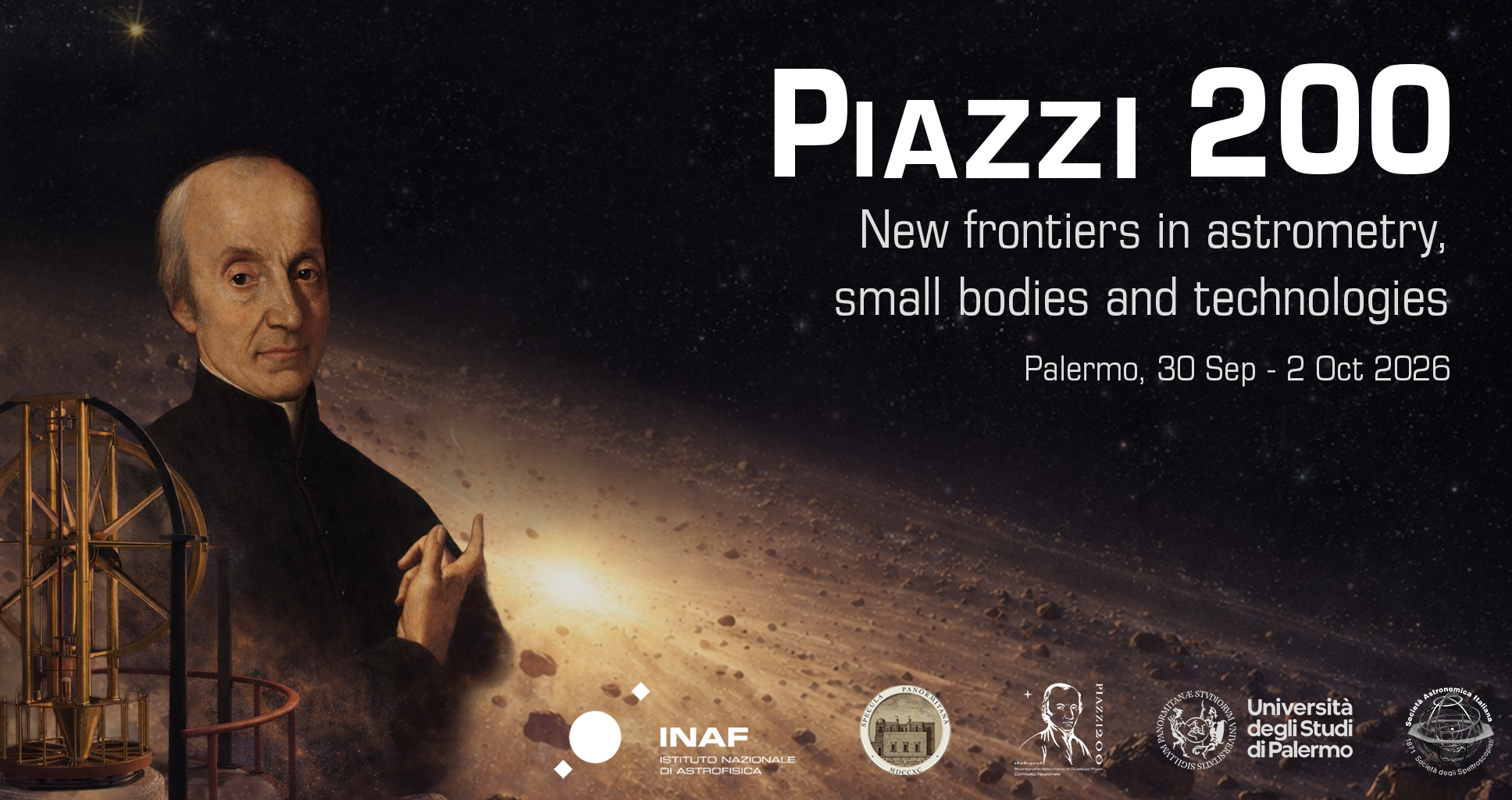
Giorgio Strano
ABSTRACT
In 1803, Giuseppe Piazzi published a first version of his star catalogue, based on observations carried out in Palermo between 1792 and 1802 with state-of-the-art instruments.
Observational hardware remained essentially unchanged from Hellenistic Antiquity until the Renaissance. Even the famous Nicolaus Copernicus gathered data with instruments almost identical to those used fourteenth centuries earlier by Claudius Ptolemy. In fact, a momentous renewal of astronomical observation took place only from the very end of the 17 h century until Piazzi’s time. Three main relevant steps can be outlined:
1) Tycho Brahe attentively analysed traditional observational instruments and their practices. As a result, he designed new devices which included better sights, more precise scales, and the possibility to quickly reverse certain components to eliminate systematic errors.
2) Without reliable clocks, Tycho minimized the time error by implementing the traditional (i.e. Ptolemaic) observational practices. When reliable clocks became available, the “modern” way to measure star coordinates via transits came into common use.
3) Beside the possibility to observe the nature of the celestial bodies, the telescope was soon understood as an instrument for precise aiming (e.g. by Johann Hevelius). However, the fruitful application of dioptric aids to graduated instruments became a reality only in the 18 th century.
The culmination of two centuries of progress materialized in the instruments built by Jesse Ramsden and others for the Palermo Observatory.