ATTENZIONE!!! SCADENZA PER L'INVIO DI ABSTRACT PROROGATA AL 21 APRILE!
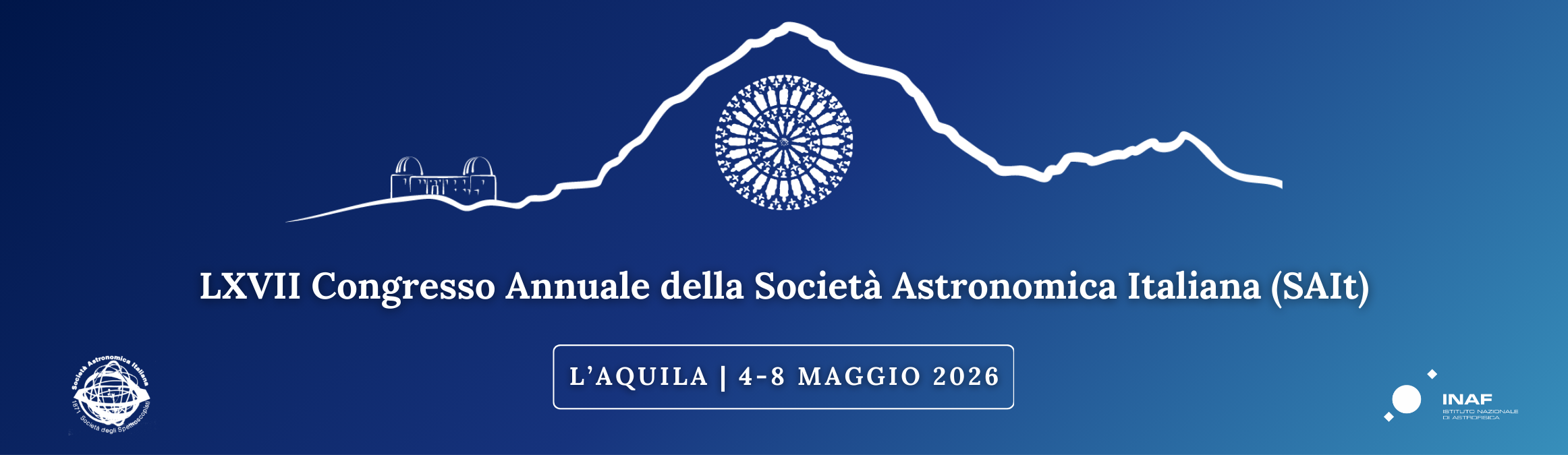
LXVII Congresso Annuale della Società Astronomica Italiana
I dieci anni delle onde gravitazionali
e le sfide astrofisiche del prossimo decennio
L’AQUILA – Sala Ipogea del Consiglio Regionale d’Abruzzo
4 – 8 maggio 2026
I dieci anni delle onde gravitazionali
e le sfide astrofisiche del prossimo decennio
L’AQUILA – Sala Ipogea del Consiglio Regionale d’Abruzzo
4 – 8 maggio 2026
Il decennio appena trascorso è stato caratterizzato da progressi decisivi (si pensi all’entrata in fase operativa di JWST ed EUCLID, alla prima luce di Rubin LSST e alle varie release della missione Gaia, solo per fare qualche esempio) e da scoperte rivoluzionarie, prima fra tutte quella delle onde gravitazionali, che ha aperto una nuova finestra sullo studio del Cosmo e della sua storia.
D’altro canto, partendo da queste conquiste e con la prossima entrata in funzione di nuove grandi facilities (come SKAO, CTAO, ELT, ET…), nonché di tecniche di osservazione e analisi la cui potenza cresce a velocità vertiginosa, il nuovo decennio appare altrettanto florido, se non ancor più ricco di conquiste scientifiche e di grandi, nuove sfide.
L’intero panorama dell’astrofisica è destinato ad esserne coinvolto: dalla formazione ed evoluzione delle strutture nelle varie epoche cosmiche alla fisica degli oggetti compatti e dei processi di accrescimento e feedback nelle galassie; dallo studio degli esopianeti e delle loro condizioni di abitabilità alla ricerca di biosignatures intorno ad altre stelle o già in altri corpi del sistema solare; dall'archeologia galattica allo studio delle prime stelle, dalla natura della materia oscura e dell’energia oscura alla storia dell’espansione dell’Universo e a test sempre più raffinati della Relatività Generale.Nella cornice della città de L’Aquila, Capitale Italiana della Cultura 2026, il LXVII Congresso Annuale della Società Astronomica Italiana vuole essere l’occasione per avviare una discussione sulle prospettive della ricerca astrofisica, e di quella italiana in particolare, da qui alla metà degli anni Trenta.
Con l’avvento dell’astronomia multi-messaggera, come stanno evolvendo le nostre capacità di osservare e capire l’Universo sempre più in dettaglio e sempre più in profondità ? Con le nuove facilities che stanno iniziando o inizieranno ad operare e a fare scoperte nei prossimi anni, come cambieranno le grandi domande della moderna astrofisica? Quali nuove sfide ci attendono?
Il congresso prevede contributi scientifici sotto forma di presentazioni orali e poster; la lingua ufficiale del congresso è l’italiano, anche se le slide delle presentazioni possono essere in inglese.
Durante il Congresso si terrà anche l’Assemblea annuale dei Soci, fondamentale punto di scambio di idee e di confronto tra le diverse realtà che contraddistinguono l'associazione, e avrà luogo l’assegnazione dei premi SAIT. Al congresso sarà dedicato un volume delle Video Memorie della SAIt a cura della Redazione.
Il LXVII Congresso Annuale della Società Astronomica Italiana (SAIt) è organizzato in collaborazione con l'Osservatorio Astronomico d’Abruzzo dell’Istituto Nazionale di Astrofisica (INAF), con il supporto del Gran Sasso Science Institute (GSSI) e dei Laboratori Nazionali del Gran Sasso dell’Istituto Nazionale di Fisica Nucleare (INFN).
L’evento ha ottenuto il patrocinio della Presidenza del Consiglio Regionale d’Abruzzo e del Comune dell’Aquila - Capitale Italiana della Cultura 2026.
Si ringraziano:
COSPAR 2026 - comitato organizzatore per Firenze 2026
Club Alpino Italiano - Sezione dell'Aquila, La Lampara Eventi
--------- [English version] --------------
LXVII Annual Congress of the Italian Astronomical Society
Ten Years of Gravitational Waves and the
Ten Years of Gravitational Waves and the
astrophysical challenges of the next decade
L'AQUILA – Sala Ipogea del Consiglio Regionale d'Abruzzo
May 4 – 8, 2026
The past decade has been marked by decisive progress (consider, for example, the operational start of JWST and EUCLID, the first light of Rubin LSST and the various releases of the Gaia mission) and by revolutionary discoveries, foremost among them the detection of gravitational waves, which has opened a new window onto the study of the Cosmos and its history.
On the other hand, building on these achievements and with the upcoming commissioning of new major facilities (such as SKAO, CTAO, ELT, ET…), as well as observational and analytical techniques whose power is growing at a staggering rate, the new decade appears equally flourishing, if not even richer in scientific achievements and major new challenges.
The entire field of astrophysics is set to be involved: from the formation and evolution of structures across different cosmic epochs to the physics of compact objects and the processes of accretion and feedback in galaxies; from the study of exoplanets and their habitability conditions to the search for biosignatures around other stars or even on other bodies within the Solar System; from galactic archaeology to the study of the first stars, from the nature of dark matter and dark energy to the history of the expansion of the Universe and increasingly refined tests of General Relativity.
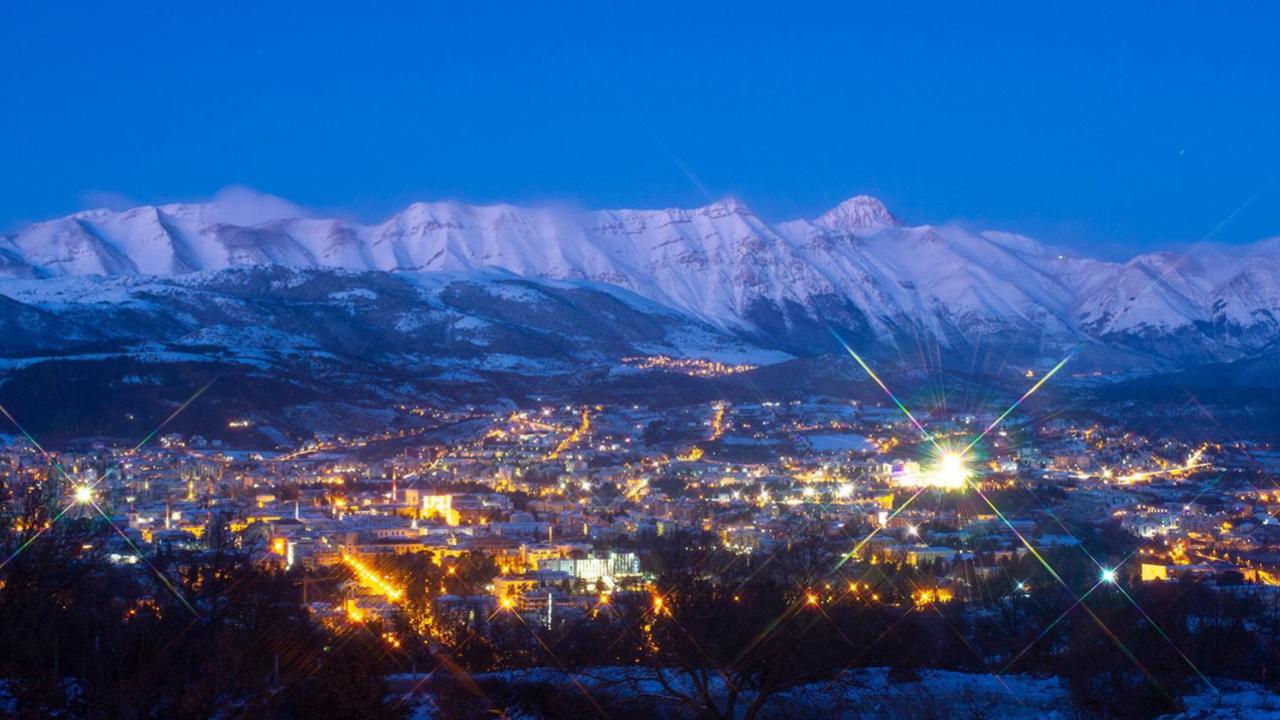
In the context of the city of L'Aquila, Italian Capital of Culture 2026, the LXVII Annual Congress of the Italian Astronomical Society aims to be an opportunity to initiate a discussion on the prospects of astrophysical research, and Italian research in particular, between now and the mid-2030s.
May 4 – 8, 2026
The past decade has been marked by decisive progress (consider, for example, the operational start of JWST and EUCLID, the first light of Rubin LSST and the various releases of the Gaia mission) and by revolutionary discoveries, foremost among them the detection of gravitational waves, which has opened a new window onto the study of the Cosmos and its history.
On the other hand, building on these achievements and with the upcoming commissioning of new major facilities (such as SKAO, CTAO, ELT, ET…), as well as observational and analytical techniques whose power is growing at a staggering rate, the new decade appears equally flourishing, if not even richer in scientific achievements and major new challenges.
The entire field of astrophysics is set to be involved: from the formation and evolution of structures across different cosmic epochs to the physics of compact objects and the processes of accretion and feedback in galaxies; from the study of exoplanets and their habitability conditions to the search for biosignatures around other stars or even on other bodies within the Solar System; from galactic archaeology to the study of the first stars, from the nature of dark matter and dark energy to the history of the expansion of the Universe and increasingly refined tests of General Relativity.
In the context of the city of L'Aquila, Italian Capital of Culture 2026, the LXVII Annual Congress of the Italian Astronomical Society aims to be an opportunity to initiate a discussion on the prospects of astrophysical research, and Italian research in particular, between now and the mid-2030s.
With the advent of multi-messenger astronomy, how are our capabilities to observe and understand the Universe evolving in ever greater detail and depth? With the new facilities that are beginning, or will soon begin, operations and making discoveries in the coming years, how will the major questions of modern astrophysics change? What new challenges await us?
The conference will include scientific contributions in the form of oral presentations and posters; the official language of the conference is Italian, although presentation slides may be in English.
The Annual Members' Meeting will also be held during the Congress, a key opportunity for exchanging ideas and discussion among the association's stakeholders. The SAIT awards ceremony will also take place.A volume of SAIt Video Memories, edited by the Editorial Staff, will be dedicated to the Congress.
The LXVII Annual Congress of the Italian Astronomical Society (SAIt) is organized in collaboration with the Astronomical Observatory of Abruzzo of the National Institute for Astrophysics (INAF), with the support of the Gran Sasso Science Institute (GSSI) and the Gran Sasso National Laboratories of the National Institute for Nuclear Physics (INFN).
The event has received the patronage of the Presidency of the Regional Council of Abruzzo and of the Municipality of L’Aquila – Italian Capital of Culture 2026.
Special thanks to:
COSPAR 2026 - Organizing Committee for Florence 2026
CAI Italian Alpine Club – L’Aquila Section, La Lampara Eventi
The LXVII Annual Congress of the Italian Astronomical Society (SAIt) is organized in collaboration with the Astronomical Observatory of Abruzzo of the National Institute for Astrophysics (INAF), with the support of the Gran Sasso Science Institute (GSSI) and the Gran Sasso National Laboratories of the National Institute for Nuclear Physics (INFN).
The event has received the patronage of the Presidency of the Regional Council of Abruzzo and of the Municipality of L’Aquila – Italian Capital of Culture 2026.
Special thanks to:
COSPAR 2026 - Organizing Committee for Florence 2026
CAI Italian Alpine Club – L’Aquila Section, La Lampara Eventi
Sessioni
-
Onde Gravitazionali e astronomia multimessaggera
-
La Galassia e il Gruppo Locale
-
Cosmologia
-
Evoluzione delle galassie
-
Oggetti variabili e transienti in astrofisica
-
Sistema Solare e astrobiologia
-
Eliofisica e Space Weather
-
Pianeti extrasolari e astrobiologia
-
Oggetti compatti
-
Grandi facilities osservative da terra e dallo spazio
-
Valorizzazione della Conoscenza
-
Calcolo, Archivi e Intelligenza Artificiale
Sessions
- Gravitational Waves and Multi-Messenger Astronomy
- The Galaxy and the Local Group
- Cosmology
- Galaxy Evolution
- Variable and Transient Objects in Astrophysics
- The Solar System and Astrobiology
- Heliophysics and Space Weather
- Exoplanets and Astrobiology
- Compact Objects
- Major Ground- and Space-Based Observational Facilities
- Knowledge valorisation
- Computing, Archives, and Artificial Intelligence
Conference information
Registration
L'iscrizione per questo evento è attualmente aperto.