 |
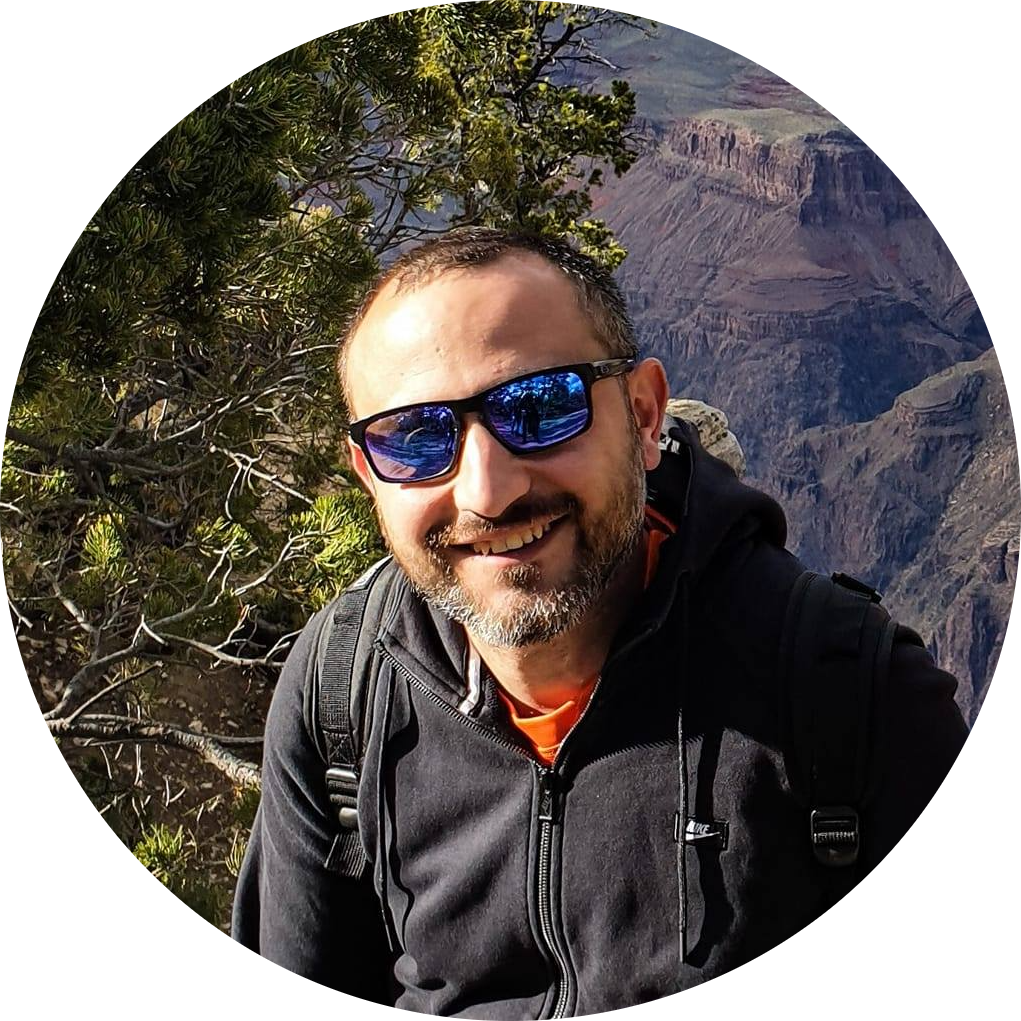
Giuseppe Angora is a researcher at the Capodimonte Astronomical Observatory in Naples, specializing in machine learning and deep learning applications in astrophysics, focusing on observational cosmology. He earned his PhD in Physics from the University of Ferrara in 2021, where he worked on detecting strong gravitational lensing events and identifying cluster galaxies within galaxy clusters. His research spans a broad range of topics, including the development and maintenance of web platforms for monitoring scientific instrumentation aboard telescopes, the application of deep learning techniques to identify strong lensing events in Euclid data, GPU-based code optimization, and information extraction from spectral data cubes. Giuseppe is actively involved in several international collaborations, including the Euclid mission and James Webb Space Telescope surveys, and is also engaged in science outreach activities. |
 |
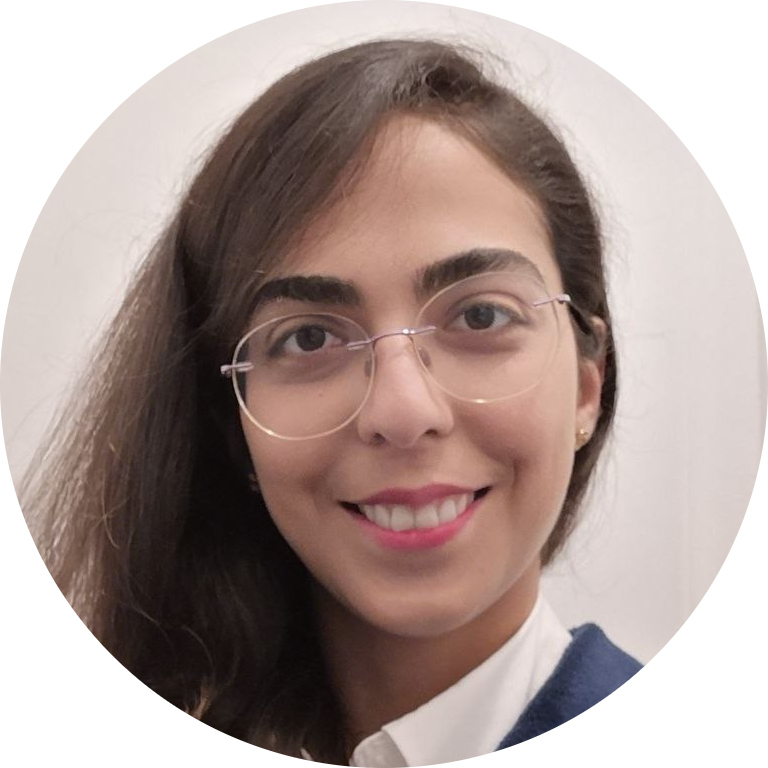
Stefano Cavuoti is a senior researcher at INAF - Astronomical Observatory of Capodimonte. He obtained a PhD in Physics in 2013 and the book extracted from his thesis won an award from the International Astrostatistics Association in 2016 in the category: "Outstanding Publication in Astrostatistics by a PostDoc". His main research concerns the usage of Machine Learning in order classify and/or derive properties (with a particular attention to the redshift) of extragalactic objects. However he gave also a contribution to other fields, by using Machine Learning, such as experiments of direct dark matter detection or the segmentation of hippocampal regions in the human brain. He is author of more than 200 scientific papers. Currently he is chair elected member of the scientifc board of DEAP-3600 experiment. |
 |
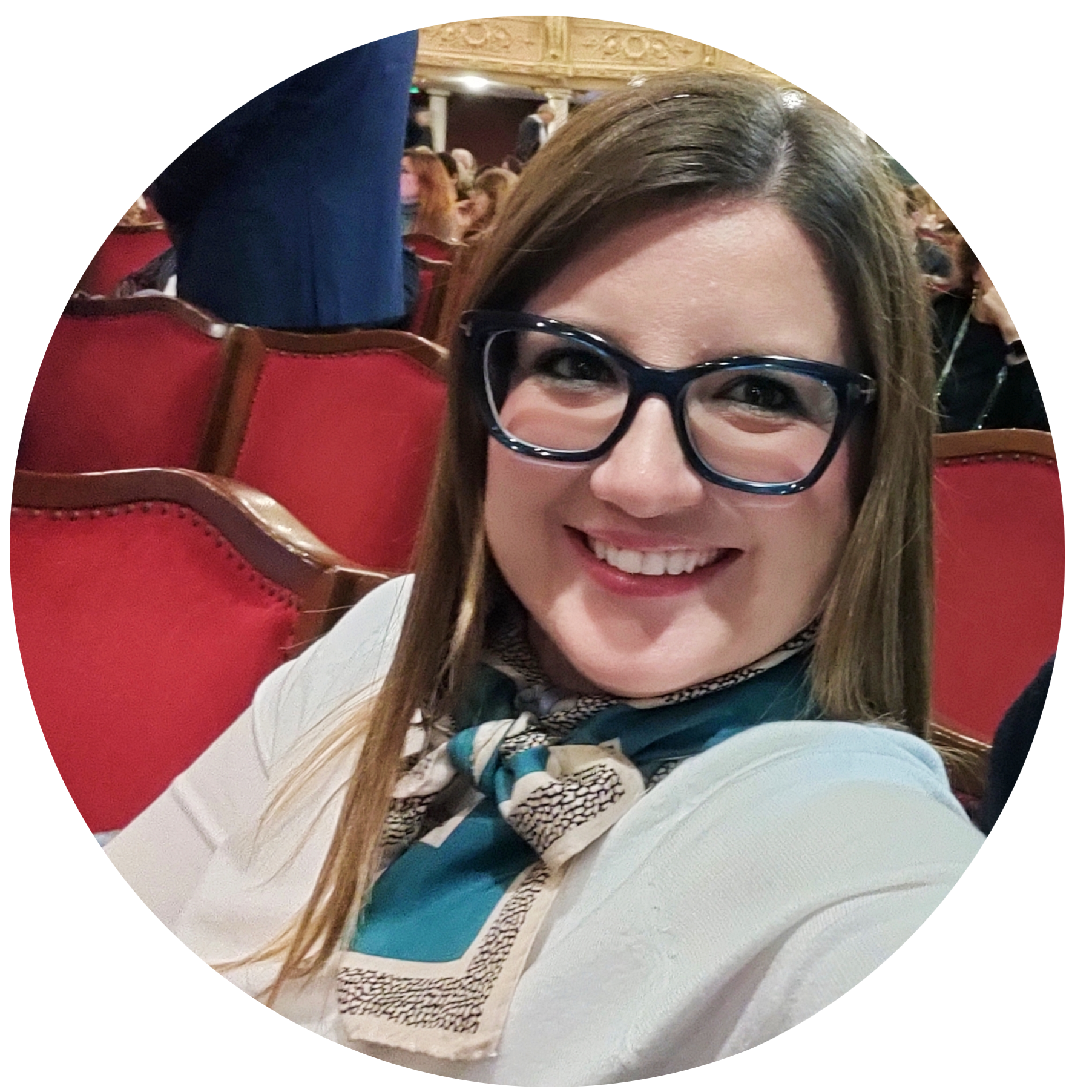
Farida Farsian is a researcher at INAF-OACT, where she focuses on the application of quantum machine learning and quantum computing in astrophysics. She obtained her PhD in Astrophysics and Cosmology from SISSA, and has a background in high-performance computing and machine learning applied to cosmological data analysis. Her research spans a range of topics including cosmic microwave background analysis, large-scale structure, and astrophysical signal detection, with particular emphasis on hybrid quantum–classical approaches. She has authored several publications in leading journals and international conferences, and actively contributes to the scientific community as a reviewer and organizer of workshops and initiatives in machine learning for astrophysics. |
 |
Ylenia Maruccia is a researcher at INAF - Astronomical Observatory of Capodimonte. She received her PhD in Physics from the University of Salento in 2013. Throughout her career, she has developed an interdisciplinary profile, gaining experience in both academia and industry. Her research focuses on the application of Artificial Intelligence to the study of complex problems across multiple disciplines, with a primary emphasis on Astrophysics and additional applications in industrial and economic contexts. She is author of numerous scientific publications and collaborates on national and international research projects. Alongside her research, she is actively involved in science outreach activities and university teaching. She has served as Lecturer of the course "Big Data and Artificial Intelligence" at the Department of Economics of the University of Salento. |
 |
Simone Riggi is a Senior Researcher at INAF – Astrophysical Observatory of Catania. He obtained his PhD in Physics from the University of Catania in 2010. He has contributed to key scientific results on the spectrum and chemical composition of high-energy cosmic rays obtained by the Pierre Auger Observatory, and has been involved in interdisciplinary projects such as MuonPortal, exploring the use of cosmic-ray muons for volume inspection and border security applications. His current research focuses on radio astronomy, in particular the characterization of Galactic radio sources in large surveys conducted with the Square Kilometre Array (SKA) and its precursors (ASKAP, MeerKAT). MeerKAT). In this context, he has also contributed to the design and development of the SKA and MeerKAT+ dish control systems. His expertise spans data analysis, machine learning, high-performance computing, monitoring and control systems, and software development for astronomy. He leads several projects (CIRASA, SCIARADA) on deep learning applications in radio astronomy and actively contributes to scientific collaborations and initiatives (ML4ASTRO) promoting the adoption of AI in astrophysics, including coordinating the “AI in Astronomy” thematic group of the INAF USC-C division. |